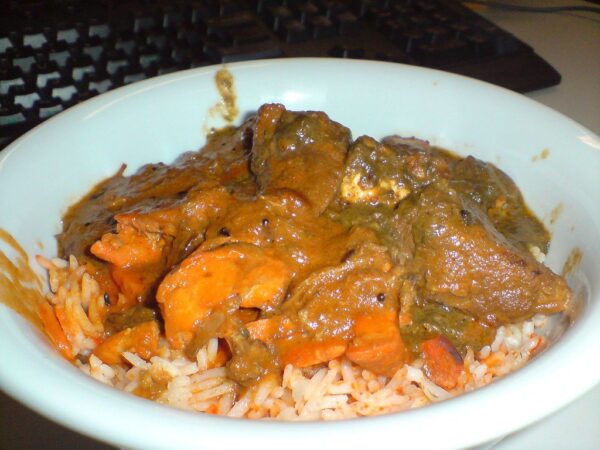
Few dishes say home-cooked Pakistani food quite like aloo gosht. This aloo gosht recipe is the classic everyday salan: tender pieces of mutton or beef and soft, flavour-soaked potatoes in a thin, spiced shorba with a layer of red oil on top. It is the kind of curry you scoop up with hot roti on a cold evening, and the kind of dish people miss most when they move abroad.
What makes this version reliable is the order of things. The masala is fried properly with golden onions and yoghurt before any water goes in, which gives the shorba real depth. Then the potatoes go in only once the meat is nearly tender, so they soften without falling apart.
What You’ll Love About It
Aloo gosht is generous, filling and economical. The potatoes stretch a smaller amount of meat to feed more people, and they soak up the spiced broth so every piece is full of flavour. It is also forgiving. Whether you use mutton, beef or even chicken, and whether you cook it in a pot or a pressure cooker, the method stays the same. It reheats beautifully too, which makes it ideal for cooking once and eating twice.
Thin Shorba or Thick Gravy?
Families in Pakistan disagree happily about this. In many Punjabi homes aloo gosht has a thin, soupy shorba that is perfect for dipping roti and pouring over rice. Others prefer a thicker gravy that clings to the meat. The difference comes down to how much water you add with the potatoes. This recipe gives a range, so start with less and add more hot water at the end until it looks the way you like. Always add hot water to a simmering curry, not cold, so the cooking does not stall.
Aloo Gosht Recipe: Classic Pakistani Meat and Potato Curry
Pakistani · Main Course · Easy
Ingredients
- 750 g bone-in mutton or beef, cut into medium pieces
- 4 medium potatoes (about 500 g), peeled and halved
- 100 ml (6-7 tbsp) vegetable oil or ghee
- 2 medium onions, thinly sliced
- 2 bay leaves
- 1 black cardamom
- 4 cloves
- 1 small cinnamon stick
- 1 tbsp ginger paste
- 1 tbsp garlic paste
- 2 medium tomatoes, chopped
- 1 1/2 tsp salt, or to taste
- 1 1/2 tsp red chilli powder
- 1/2 tsp turmeric
- 1 1/2 tsp ground coriander
- 1 tsp ground cumin
- 3 tbsp plain yoghurt, whisked
- 1-1.25 litres (4-5 cups) water, as needed
- 1/2 tsp garam masala
- 2 green chillies, slit
- Handful fresh coriander, chopped
Method
- Heat the oil in a heavy pot or pressure cooker. Fry the onions over medium heat for 10-12 minutes until golden brown.
- Add bay leaves, black cardamom, cloves and cinnamon and fry for 30 seconds.
- Add the meat and fry on high heat for 5 minutes until it changes colour. Add ginger and garlic pastes and fry for 2 minutes.
- Add tomatoes, salt, chilli powder, turmeric, coriander and cumin. Cook for 5-6 minutes, adding a splash of water if it sticks, until the oil separates.
- Stir in the yoghurt and bhuna for 3-4 minutes until the masala is thick and glossy.
- Add 500 ml water, cover and simmer for 50-60 minutes (or pressure cook for 20-25 minutes for beef, 15-20 for mutton) until the meat is nearly tender.
- Add the potatoes and 500-750 ml hot water, depending on how thin you like the shorba. Cover and simmer for 15-20 minutes until the potatoes are soft.
- Finish with garam masala, green chillies and fresh coriander. Rest for 5 minutes before serving.
Ingredients and Choices
- Meat: bone-in mutton (goat) is the traditional choice. Beef from the shin or chuck works well and is popular for weekday cooking. Bones add body to the shorba, so avoid fully boneless cuts if you can.
- Potatoes: waxy or all-purpose potatoes hold their shape. Floury potatoes will break down more and thicken the gravy, which some people like.
- Onions: fried to golden brown, they give the curry sweetness and colour. Do not let them burn, or the shorba will taste bitter.
- Whole spices: black cardamom brings a smoky note that is typical of Pakistani salan. Bay leaves, cloves and cinnamon add warmth.
- Yoghurt: it gives a gentle tang and helps thicken the masala. Whisk it first and add it while stirring.
- Shortcut: a pressure cooker cuts the cooking time dramatically, especially for beef.
Cooking Walkthrough
1. Golden onions and whole spices
Start with patience. Slice the onions evenly so they brown at the same rate, and stir often once they begin to colour. Pull the heat back if the edges darken too fast. When they are a uniform golden brown, add the whole spices and let them sizzle briefly to release their oils.
2. Searing and the masala
Add the meat and turn up the heat so it browns rather than boils. Ginger and garlic follow, then the tomatoes and ground spices. This is the bhuna stage, and it matters. Keep stirring and scraping until the tomatoes are completely broken down and you see oil separating at the sides. Adding yoghurt and frying for a few more minutes gives a richer, rounder flavour.
3. Tenderising the meat
Add water, cover and simmer gently. Mutton from a young animal can be tender in under an hour, while beef often needs longer. Check now and then, and add a little more hot water if it gets too dry. In a pressure cooker, follow the timings in the recipe card and let the pressure release naturally.
4. Adding the potatoes
Once a fork slides into the meat with only slight resistance, add the potatoes and more hot water. Simmer until the potatoes are soft all the way through. A few potatoes breaking at the edges is a good thing, as they naturally thicken the shorba.
Tips for This Aloo Gosht Recipe
- Cut the potatoes in large pieces so they do not turn mushy.
- Soak the cut potatoes in water until needed to stop them browning.
- Let the curry rest for 5-10 minutes after cooking; the flavours settle and the oil rises to the top.
- For a chicken aloo version, use bone-in chicken and add the potatoes after the masala, cooking everything together for about 25 minutes until the chicken reaches 74°C (165°F).
- Add a few pieces of turnip or a handful of peas for a seasonal twist.
Serving and Storing
Serve this aloo gosht recipe with hot chapati, tandoori roti or plain boiled basmati rice. Sliced onions with lemon juice and green chillies, a bowl of plain yoghurt or a simple kachumber salad complete the meal.
Cool leftovers and keep them in the fridge in a covered container for up to 3 days. The flavour often deepens overnight. Reheat in a pan until piping hot, adding a splash of hot water if the shorba has thickened. Potatoes can turn slightly grainy after freezing, so if you plan to freeze, it is best to freeze the meat and gravy alone for up to 2 months and add freshly boiled potatoes when reheating.
FAQs
Can I use boneless meat for this aloo gosht recipe?
Yes, but the shorba will be lighter in body. Use a mix of boneless and a few bone-in pieces if possible.
How do I get the red oil layer on top?
Fry the masala well until the oil separates, and use enough oil or ghee. Kashmiri chilli powder gives a deeper red colour without extra heat.
My potatoes fell apart. What went wrong?
They were probably added too early or cut too small. Add them only when the meat is nearly tender, and keep the pieces large.
Can I cook aloo gosht in a slow cooker?
Yes. Do the onion and masala stages in a pan, then transfer to a slow cooker with the meat and water. Cook on low for 6-7 hours, adding the potatoes for the last 1.5-2 hours.
A Dish That Feels Like Home
This aloo gosht recipe is simple at heart, but it rewards care at each step: golden onions, a well-fried masala and potatoes added at the right time. Make a big pot, put out hot rotis and let everyone help themselves. It is everyday comfort food at its best.