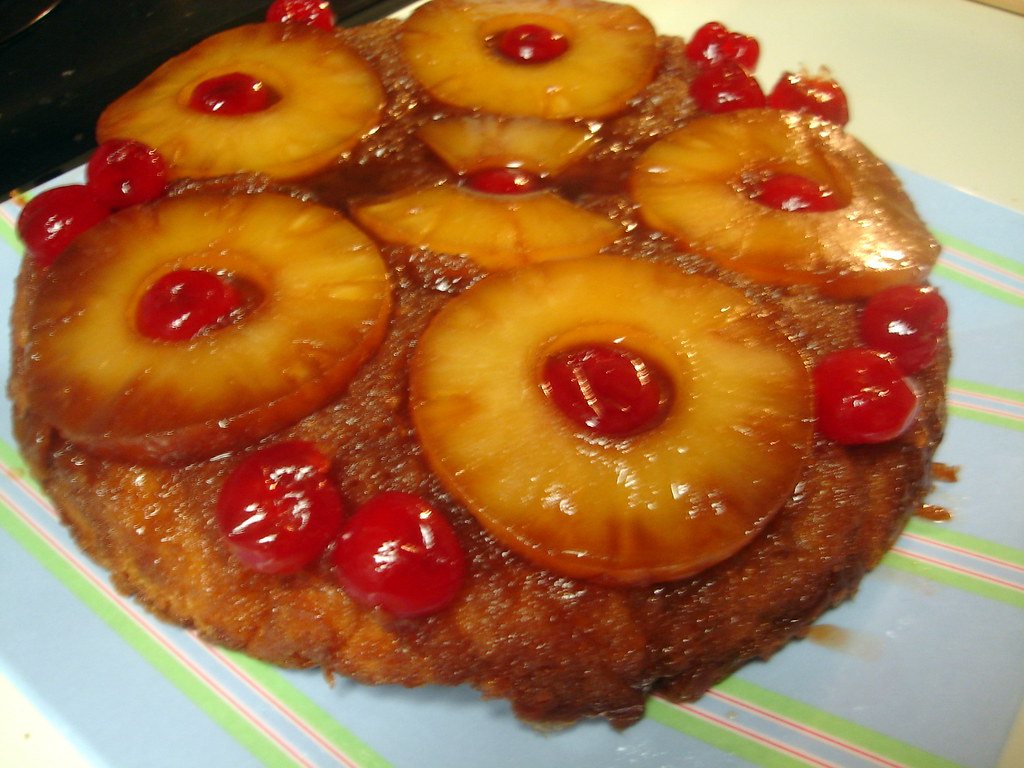
There is something cheerful about a pineapple upside-down cake. You bake the fruit at the bottom of the tin, flip it out, and reveal a glossy, golden top with neat rings of pineapple and bright cherries, all glazed in buttery brown sugar caramel. Underneath sits a soft vanilla sponge that soaks up some of those sticky juices.
This version keeps the method classic and reliable. The sponge uses some of the pineapple juice from the can, so nothing goes to waste and the fruity flavour runs all the way through. It is a retro dessert that still wins every table, and it needs no frosting or decoration because the topping does all the work.
Why It Is Always a Hit
The caramel forms by itself in the oven: butter and brown sugar melt together under the fruit and bubble into a rich, toffee-like glaze. You get a show-stopping finish with almost no effort. The cake is also budget-friendly, made with a can of pineapple and pantry staples, and it is equally good warm with custard or cold the next day.
It is especially popular at family dawats and tea parties because it looks impressive on a plate, slices neatly and appeals to children and adults alike.
Picking the Right Tin and Fruit
Use a solid-bottomed round tin that is at least 5 cm (2 inches) deep. A loose-bottomed or springform tin will leak the butter and sugar into your oven. A heavy cast-iron skillet is a traditional option and gives particularly good caramelisation.
Canned pineapple rings in juice are the easiest choice and give a uniform look. Pineapple in syrup works too, though the topping will be sweeter. Fresh pineapple tastes wonderful but releases more liquid; slice it about 1 cm thick and pat it very dry. Avoid fresh pineapple in the batter itself, as its enzymes can affect the texture.
Pineapple Upside-Down Cake Recipe with Buttery Caramel Topping
American · Dessert · Easy
Ingredients
- For the topping: 60 g unsalted butter (4 tbsp)
- For the topping: 100 g light brown sugar (1/2 cup, packed)
- For the topping: 7 to 8 canned pineapple rings in juice, drained (juice reserved)
- For the topping: 7 to 8 glacé or maraschino cherries
- 115 g unsalted butter, softened (1/2 cup)
- 150 g caster sugar (3/4 cup)
- 2 large eggs, at room temperature
- 1 tsp vanilla extract
- 190 g plain flour (1 1/2 cups)
- 1 1/2 tsp baking powder
- 1/4 tsp fine salt
- 120 ml reserved pineapple juice or milk (1/2 cup)
Method
- Heat the oven to 180°C (160°C fan) / 350°F. Use a 23 cm (9 inch) round cake tin at least 5 cm deep, not a loose-bottomed one.
- Melt the 60 g butter, pour it into the tin and sprinkle the brown sugar evenly over the base.
- Pat the pineapple rings dry and arrange them over the sugar, placing a cherry in the centre of each ring.
- Beat the softened butter and caster sugar until pale and fluffy, then beat in the eggs one at a time and the vanilla.
- Whisk the flour, baking powder and salt together, then fold into the butter mixture in two additions, alternating with the pineapple juice.
- Spoon the batter gently over the fruit and spread it to the edges without moving the rings.
- Bake for 40 to 45 minutes, until golden and a skewer in the centre comes out clean.
- Cool in the tin for 5 minutes, run a knife around the edge, place a plate on top and flip the cake out in one confident movement.
- Replace any fruit that sticks to the tin and serve warm or at room temperature.
Ingredient Notes
- Brown sugar: light brown sugar gives a golden caramel; dark brown sugar gives a deeper, more molasses-like flavour.
- Cherries: glacé cherries are traditional. If you cannot find them, use halved fresh cherries, a few pecans or walnut halves, or simply leave the centres empty.
- Butter: soft butter for the sponge must be at room temperature to cream properly. Salted butter can be used; just leave out the added salt.
- Pineapple juice: replaces milk for extra flavour. Milk gives a slightly softer, more neutral sponge if you prefer.
- Flour: plain flour with baking powder. Self-raising flour can be used; skip the baking powder.
Walkthrough: From Tin to Plate
Building the Topping
Pour the melted butter into the tin and tilt it to cover the base. Sprinkle the brown sugar evenly; there is no need to stir it. Drying the pineapple rings with kitchen paper is important, because excess juice thins the caramel and can make the sponge soggy. Arrange one ring in the centre and the rest around it. You can cut extra rings in half and tuck them in to fill gaps.
Making the Sponge
Cream the butter and sugar well, as this is what gives the cake its light texture. Add the dry ingredients and juice alternately, starting and ending with flour, and stop mixing as soon as the batter is smooth. Drop spoonfuls of batter around the tin first, then spread it gently with the back of a spoon so the fruit stays in place.
Baking and Flipping
The cake is ready when it is deep golden, springy in the centre and starting to pull away from the edges. Do not leave it to cool for long before flipping: after about 5 minutes the caramel is still loose enough to release. If you wait too long, it sets and glues the fruit to the tin. Wear oven gloves, hold the plate and tin firmly together and turn them over in one go. Lift the tin slowly.
Tips for Success
- Choose a serving plate slightly larger than the tin with a small lip to catch the caramel.
- If some fruit sticks, simply lift it out with a knife and press it back into place; nobody will know.
- Put a baking tray on the shelf below to catch any drips.
- For a shinier top, brush any caramel left in the tin over the fruit.
Variations
A pineapple upside-down cake is a great base for experimenting. Add 1/2 teaspoon of ground cinnamon or cardamom to the sponge for warmth. Swap a little of the flour for desiccated coconut for a tropical twist. For individual servings, divide the topping and batter between 12 greased muffin cups and bake for 18 to 22 minutes. You can also make an apricot or peach version using canned halves, cut side up.
Serving and Keeping
Serve warm with custard, vanilla ice cream, whipped cream or a spoon of plain yoghurt. The cake keeps, covered, at room temperature for a day, and in the fridge for up to 3 days. Warm individual slices in the microwave for 15 to 20 seconds to soften the caramel again. Freezing is not ideal, as the fruit becomes watery when thawed.
Frequently Asked Questions
Why did my cake stick to the tin?
It was left to cool too long before flipping. Turn it out after about 5 minutes while the caramel is still warm and loose.
Why is the sponge soggy at the bottom?
Wet pineapple or underbaking. Pat the fruit dry and bake until a skewer in the centre comes out clean.
Can I make a pineapple upside-down cake without eggs?
Yes. Replace the eggs with 120 g of plain yoghurt and add 1/4 teaspoon of bicarbonate of soda. Expect a slightly denser sponge.
Can I make it ahead?
Bake it a few hours ahead and keep it at room temperature. Warm slices briefly before serving if you like the caramel soft.
Can I bake a pineapple upside-down cake in a skillet?
Yes, and it is a lovely way to do it. Melt the butter and brown sugar together in a 25 cm (10 inch) ovenproof cast-iron skillet over low heat until bubbling, then take it off the heat, arrange the fruit and add the batter. Bake as usual, checking from 35 minutes, because the wider pan gives a slightly thinner cake. The heavy iron holds heat well, so the caramel turns darker and stickier.
Can I use fresh pineapple instead of canned?
You can. Slice it into rings about 1 cm thick, remove the core with a small cutter and pat the slices very dry. Fresh fruit gives a brighter, tangier topping.