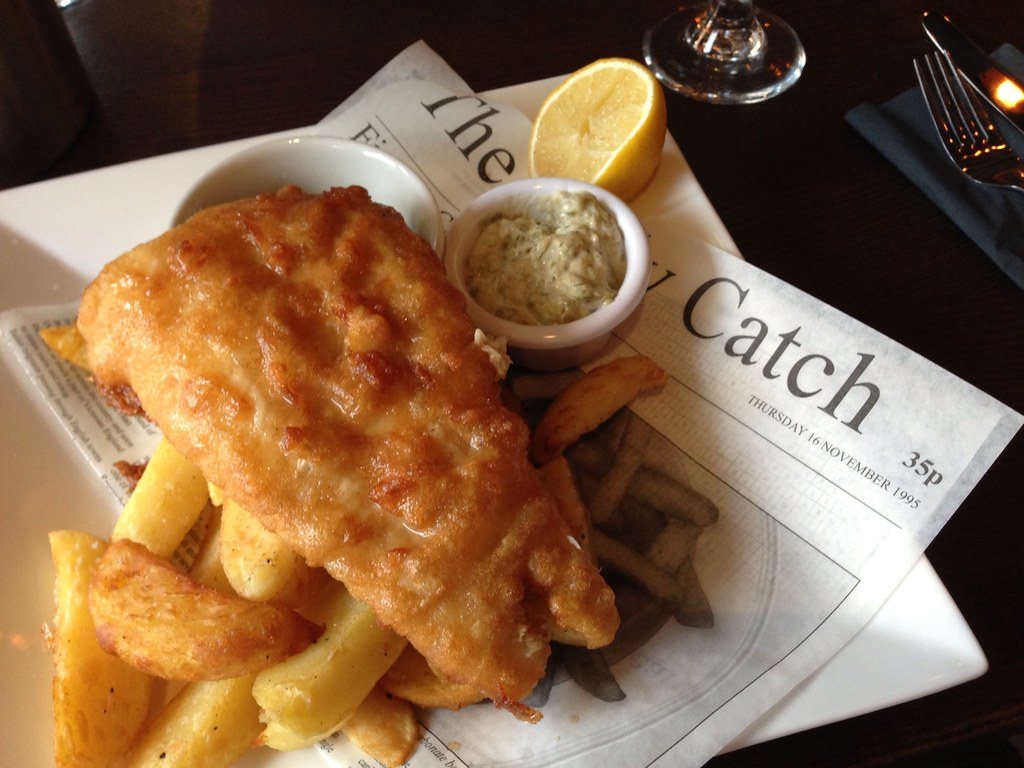
Few meals are as satisfying as a plate of hot, crackly fish with thick golden chips, and this fish and chips recipe brings that chip-shop experience into your own kitchen. The batter uses ice-cold sparkling water instead of beer, which keeps it alcohol-free while still puffing up light and crisp around flaky white fish.
The chips are par-boiled and then double-fried, a method that gives fluffy centres and shells that stay crunchy long enough to reach the table. With a bit of organisation, the whole meal comes together in about an hour.
What Makes This Version Special
Restaurant fish and chips depends on contrasts: shattering batter against soft, steaming fish; crisp chip edges against a floury inside. This recipe gets there with a few deliberate choices.
- Cornflour and baking powder in the batter for lightness and extra crunch.
- Ice-cold fizzy water, which creates bubbles and slows gluten development, so the coating stays delicate rather than bready.
- Three-stage chips: boiled, fried low, then fried hot for maximum crispness.
- A wire rack for draining, so nothing sits in its own steam and goes soggy.
Choosing Your Fish and Potatoes
Cod and haddock are the traditional choices. Cod has large, soft flakes, while haddock is slightly sweeter with a finer texture. Pollock, hake and basa are good, more affordable alternatives. In Pakistan, firm white fish such as sole or a boneless river fish fillet also fry nicely. Aim for fillets about 2 cm thick so the fish cooks in the same time it takes the batter to turn golden.
For the chips, use floury potatoes with a high starch content. Waxy salad potatoes stay dense and never get that fluffy interior. If you are unsure, older, larger potatoes are usually floury.
Fish and Chips Recipe: Crispy Beer-Free Batter and Fluffy Chips
British · Main Course · Medium
Ingredients
- 4 skinless white fish fillets (cod or haddock), about 150 g each
- 1 kg floury potatoes (Maris Piper, King Edward or Russet), peeled
- Sunflower or vegetable oil for deep frying (about 2 litres)
- 200 g (1 2/3 cups) plain flour, plus 3 tbsp for dusting
- 50 g (1/3 cup) cornflour (cornstarch)
- 2 tsp baking powder
- 1 tsp salt, plus extra for seasoning
- 1/2 tsp turmeric or paprika (optional, for colour)
- 300 ml (1 1/4 cups) ice-cold sparkling water
- Lemon wedges, malt vinegar and tartare sauce, to serve
Method
- Cut the potatoes into thick chips about 1.5 cm wide. Rinse in cold water, then simmer in salted water for 4 to 5 minutes until just tender at the edges. Drain carefully and spread out to steam-dry for 10 minutes.
- Heat the oil in a deep, heavy pan or deep fryer to 140°C (285°F). Fry the chips in batches for 6 to 8 minutes until cooked through but still pale. Drain on a rack.
- Pat the fish completely dry with kitchen paper and season lightly with salt. Dust each fillet in plain flour and shake off the excess.
- Whisk the flour, cornflour, baking powder, salt and turmeric in a bowl. Just before frying, whisk in the ice-cold sparkling water to make a smooth batter the thickness of double cream.
- Raise the oil temperature to 180°C (350°F). Dip a fillet in the batter, let the excess drip off, and lower it into the oil away from you. Fry two pieces at a time for 5 to 7 minutes, turning once, until deep golden and the fish reaches 63°C (145°F) inside.
- Drain the fish on a wire rack and keep warm in a low oven at 100°C (210°F).
- Return the chips to the 180°C (350°F) oil in batches for 2 to 3 minutes until crisp and golden. Drain, salt immediately and serve with the fish, lemon wedges and sauces.
Step-by-Step: From Raw to Golden
Par-boil and dry the chips
Rinsing the cut potatoes removes surface starch that would otherwise make them stick together and brown unevenly. A short simmer cooks the outside layer so it roughens slightly, and those rough edges become the crispiest bits later. Let the chips steam-dry thoroughly; water hitting hot oil causes spitting and soft chips. You can even chill them uncovered in the fridge for an hour to dry further.
The first, low-temperature fry
Frying at 140°C cooks the potato all the way through without colouring it. The chips should look pale and feel soft when pressed. At this point they can wait on a rack for up to two hours while you prepare the fish.
Batter and fry the fish
Mix the batter only at the last moment, so the bubbles are still lively when the fish goes in. A few small lumps are fine; overmixing makes it tough. Dusting the fish in flour first helps the batter cling. Lower each fillet into the oil slowly, holding it for a couple of seconds before releasing, so it floats rather than sticking to the bottom. Keep batches small, as adding too much at once drops the oil temperature and gives greasy results.
The final crisping fry
Once the fish is out and resting in a warm oven, return the chips to the hotter oil. In just a few minutes they turn deep golden and crisp. Salt them immediately while the surface is still slick, so the salt sticks.
Deep-Frying Safely at Home
- Use a heavy, deep pan and never fill it more than one-third full of oil.
- A digital or clip-on thermometer is the single most useful tool for this fish and chips recipe.
- Keep children and pets away from the stove, and never leave hot oil unattended.
- Keep a lid and a damp tea towel nearby. Never put water on an oil fire; turn off the heat and cover the pan.
- Let the oil cool completely before straining and storing or disposing of it.
Variations and Serving Ideas
For a desi-style fish fry, add 1 teaspoon each of chilli powder, ground cumin and ajwain to the batter and serve with green chutney. Oven chips can replace fried ones: toss par-boiled chips in 3 tablespoons of oil and roast at 220°C (425°F) for 35 to 40 minutes, turning once. The batter also works well for prawns, chicken strips cooked through to 74°C (165°F), or onion rings.
Serve with the classic British sides: mushy peas, tartare sauce, a sprinkle of malt vinegar, lemon wedges and perhaps a pickled onion. Ketchup and a simple coleslaw are popular with children.
Leftovers and Reheating
Fried food is best eaten straight away, but leftovers can be refrigerated in an airtight container for up to 1 day. Reheat on a rack in an oven or air fryer at 200°C (400°F) for 8 to 10 minutes until piping hot and crisp again. The microwave will make both the batter and chips soft.
Frequently Asked Questions
Why is my batter soggy or greasy?
Almost always because the oil was not hot enough or the pan was overcrowded. Check the temperature before every batch and let it recover between pieces.
Can I make this fish and chips recipe in an air fryer?
Wet batter does not work in an air fryer, as it drips through the basket. Instead, coat the fish in flour, egg and panko breadcrumbs, spray with oil and air fry at 200°C (400°F) for 10 to 12 minutes.
What oil is best for frying?
A neutral oil with a high smoke point, such as sunflower, vegetable, canola or groundnut oil. Traditional chippies sometimes use beef dripping for flavour.
Can I use frozen fish?
Yes, but thaw it fully in the fridge and pat it very dry first. Excess moisture prevents the batter from sticking.
Can I prepare anything in advance?
Yes. Cut and par-boil the potatoes, then give them the first low fry up to two hours ahead. Weigh out the dry batter ingredients too, and add the sparkling water only when the oil is hot and you are ready to fry the fish.
Bringing the Chippy Home
This fish and chips recipe takes a little organisation, but the reward is a crackling, golden plate that rivals any takeaway. Keep the batter cold, the oil hot and the chips dry, and you will turn out fish and chips worth gathering the family around.