Soft, warm whole wheat roti is the quiet hero of the Pakistani dinner table. It goes with almost everything, from daal and sabzi to karahi and qorma, and when made well it stays tender long after it leaves the tawa. This guide walks you through a whole wheat roti that puffs up like a balloon and does not turn into cardboard by the time everyone sits down.
There are only two ingredients, so the results depend on technique: a soft, well-rested dough, even rolling and the right heat on the tawa. Once you get these right, you can make roti every day without thinking twice.
Why You’ll Love Making Roti at Home
- Healthy and wholesome. Made from whole grain atta with no yeast, no sugar and little or no fat.
- Fast. Each roti cooks in about a minute once the dough is ready.
- Soft for hours. A properly hydrated dough and a cloth-lined container keep rotis tender for packed lunches.
- Cheap and versatile. A bag of atta goes a long way and pairs with every curry in your repertoire.
Choosing Atta and Other Ingredients
The flour you use matters more than anything else.
- Chakki atta: Stone-ground whole wheat flour, sold in Pakistani and South Asian shops, gives the softest rotis. It is milled finer and has a slightly different texture from Western wholemeal flour.
- Wholemeal flour: If chakki atta is unavailable, use fine wholemeal flour and sift out the coarsest bran. Mixing it with about a quarter plain flour makes rolling easier.
- Water: Lukewarm water helps the flour absorb moisture faster, giving a softer dough. Some cooks use a splash of milk for extra tenderness.
- Salt and oil: Both are optional. Many households make plain rotis with just atta and water. A teaspoon of oil makes the dough easier to handle.
- Ghee: Brushed on top, it adds flavour and keeps rotis soft, but plain rotis are just as traditional.
Whole Wheat Roti Recipe: Soft Chapati That Puffs Every Time
Pakistani · Side Dish · Easy
Ingredients
- 300 g chakki atta (whole wheat flour), about 2 1/2 cups, plus extra for dusting
- 1/2 tsp salt (optional)
- About 200 to 220 ml lukewarm water (just under 1 cup)
- 1 tsp oil (optional, for kneading)
- Ghee or butter, for brushing (optional)
Method
- Mix the atta and salt in a wide bowl. Add water gradually, mixing with your fingers, until a soft dough forms.
- Knead for 5 to 7 minutes, wetting your hands as needed, until smooth and soft. Rub with oil, cover and rest for at least 20 minutes.
- Knead briefly again and divide into 10 balls, about 50 g each.
- Heat a tawa or flat pan over medium-high heat.
- Dust a ball with flour, flatten it and roll into an even 15 to 18 cm circle, turning as you roll.
- Place on the hot tawa. When small bubbles appear, after about 15 to 20 seconds, flip.
- Cook the second side for 30 to 40 seconds until light brown spots appear.
- Lift with tongs and place the first side directly over a gas flame for a few seconds until it puffs, or press gently with a cloth on the tawa.
- Brush with ghee if you like and stack in a cloth-lined container to keep soft.
How to Make Soft Roti
The Dough
Add water bit by bit, as atta varies in how much it absorbs. The dough should be soft and slightly sticky when you start kneading, becoming smooth and supple as you go. Knead with the heel of your hand, folding the dough over itself, and wet your fingertips if it feels stiff. A good roti dough yields easily when you press it and leaves a shallow fingerprint.
Resting
Resting is not optional. Twenty to thirty minutes lets the bran soften and the gluten relax, so the roti rolls out thin without fighting back. Many families knead the dough in the morning and keep it in the fridge for the evening meal.
Rolling Evenly
Dip the ball in dry flour, flatten it into a disc and roll from the centre outward with light, even pressure, giving the roti a slight turn every few strokes. Even thickness is essential for puffing. If one area is thin, steam escapes there instead of filling the roti. Brush off excess flour before cooking so it does not burn on the tawa.
Cooking on the Tawa
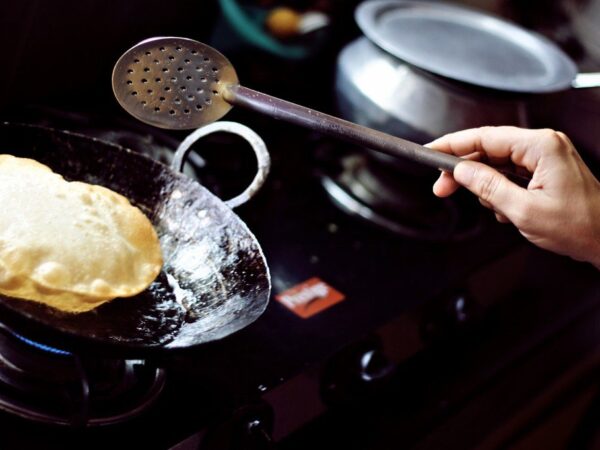
The tawa needs to be hot but not smoking. Cook the first side only briefly, until it changes colour and tiny bubbles appear, then flip. The second side cooks a little longer and should develop light brown spots. When you place the first side directly on a gas flame, the trapped moisture turns to steam and the roti puffs dramatically. On an electric hob, press the roti gently with a folded cloth to encourage the puff.
Tips for Soft Rotis
- Never rush the resting time. It is the most important step after kneading.
- Do not cook rotis on low heat. A slow cook dries them out and makes them stiff.
- Avoid flipping too many times. Two flips on the tawa and one on the flame is enough.
- Store cooked rotis in a cloth-lined hot box or wrap them in a clean tea towel straight away.
- If your rotis are hard, make the dough slightly softer next time and keep the heat higher.
Variations
Once you have mastered the basic whole wheat roti, try mixing a tablespoon of besan into the atta for a slightly nutty missi-style roti. For extra fibre, add a spoonful of ground flaxseed or oat flour. Methi roti uses a handful of chopped fresh fenugreek kneaded into the dough. Young children often enjoy small rotis brushed with ghee and a sprinkle of sugar.
Serving and Storage
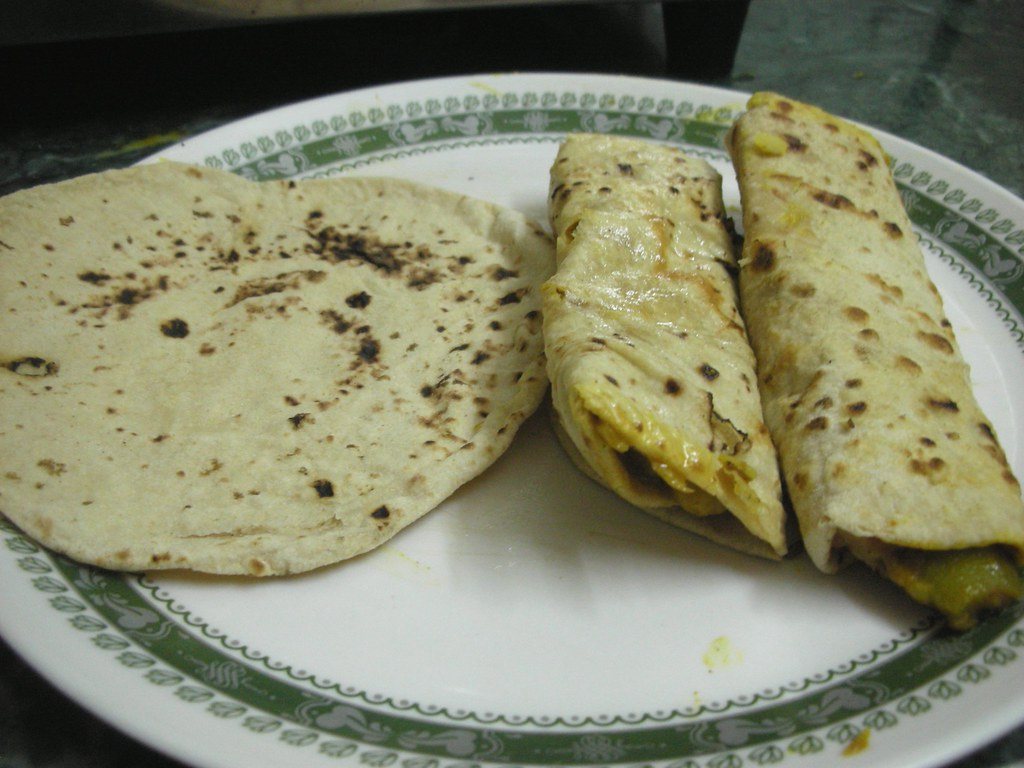
Serve rotis with any daal, vegetable sabzi, chicken salan, karahi or bhuna gosht. They are also great for wraps: roll them around leftover tikka, kebabs or an egg and onion filling for an easy lunch.
Wrapped in a cloth and placed in a closed container, rotis stay soft for several hours. Leftovers keep in a zip bag in the fridge for up to two days. Reheat them on a hot tawa for a few seconds per side, or sprinkle with a little water and microwave covered for 15 to 20 seconds. To freeze, stack cooled rotis with baking paper between them and seal tightly; they keep for up to two months.
Frequently Asked Questions
Why doesn’t my whole wheat roti puff up?
Usually it is uneven rolling, a tawa that is not hot enough, or a tear in the dough. Roll evenly and make sure the first side is cooked only briefly before flipping.
Is roti the same as chapati?
In everyday Pakistani and Indian cooking, the terms are used interchangeably for thin, unleavened whole wheat flatbreads cooked on a tawa.
Can I keep roti dough in the fridge?
Yes. Store it in an airtight container for up to two days. It may darken slightly on the surface, which is harmless. Bring it to room temperature before rolling.
How can I keep rotis soft for a lunchbox?
Brush them lightly with ghee while hot and wrap them in foil or a cloth. The fat and trapped steam keep them pliable for hours.
Final Word
Good whole wheat roti is all about rhythm: soft dough, a short rest, even rolling and a hot tawa. Make it a few times and you will find the process relaxing, with a stack of warm, puffed rotis to show for it.