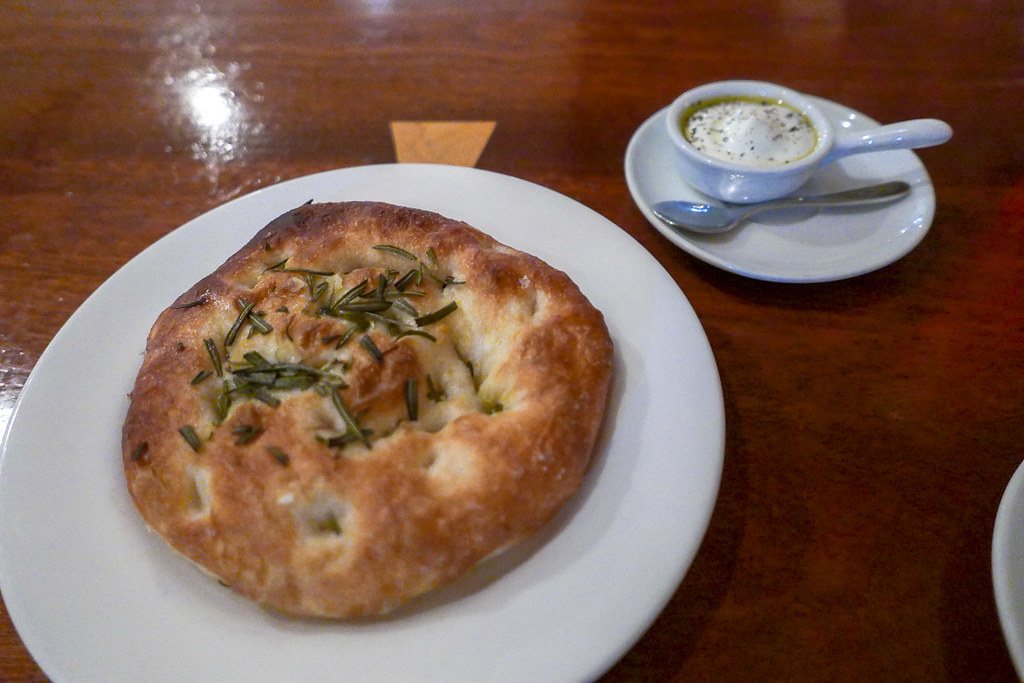
This rosemary focaccia recipe is one of the easiest ways to bake impressive bread at home. There is no kneading and no shaping skill involved, yet the result has a tall, airy crumb full of holes, a golden top glistening with olive oil and a crisp, almost fried bottom crust.
The dough relies on time and a few gentle folds to build strength, so the work is minimal. Fresh rosemary and flaky salt pressed into deep dimples give the classic Ligurian-style flavour, and the whole thing comes together in a single baking tin. If you have never baked with yeast before, this is a perfect place to start.
Reasons to Bake This Focaccia
- Hands-off dough. A wooden spoon or spatula is enough to mix it.
- Bakery-style texture. High hydration gives big, open bubbles and a light crumb.
- Flexible schedule. Bake it the same day or let it rise slowly in the fridge for deeper flavour.
- Endlessly adaptable. Once you know the base, toppings can change with the seasons.
The Ingredients Explained
- Bread flour: Higher protein helps the wet dough hold its shape and trap air. Plain flour can be used, but reduce the water by about 25 ml and expect a slightly flatter loaf.
- Water: The dough is very wet by design. That moisture turns to steam in the oven and creates the open crumb. Lukewarm water speeds up the yeast.
- Extra virgin olive oil: This is a main flavour, not just a coating, so use one you enjoy tasting. The oil in the tin is what fries the base until crisp.
- Fresh rosemary: Fresh is far better than dried here. If you only have dried, use one teaspoon and mix it into the oil before drizzling so it does not burn.
- Flaky sea salt: Adds crunch and bursts of seasoning. Coarse sea salt works, though use a little less.
Rosemary Focaccia Recipe: Easy No-Knead Bread with Olive Oil
Italian · Side Dish · Easy
Ingredients
- 500 g bread flour, about 4 cups
- 10 g fine salt (1 3/4 tsp)
- 7 g instant yeast (2 1/4 tsp)
- 425 ml lukewarm water (1 3/4 cups)
- 90 ml extra virgin olive oil (6 tbsp), divided
- 2 to 3 sprigs fresh rosemary, leaves picked
- 1 tsp flaky sea salt
- 1 garlic clove, thinly sliced (optional)
Method
- Whisk the flour, salt and yeast in a large bowl. Add the water and stir with a spatula until no dry flour remains; the dough will be very wet.
- Drizzle 1 tbsp olive oil over the dough, cover and leave for 30 minutes.
- With wet hands, perform a set of stretch and folds: lift one side of the dough, stretch it up and fold it over. Turn the bowl and repeat 4 times. Do 3 sets, 30 minutes apart.
- Cover and let the dough rise until doubled, about 1 hour at room temperature, or refrigerate for 12 to 24 hours.
- Pour 3 tbsp olive oil into a 23 x 33 cm (9 x 13 inch) metal tin. Tip the dough in, turn to coat and gently stretch it towards the corners.
- Cover and let rise for 45 to 90 minutes until puffy and bubbly. Heat the oven to 220°C (200°C fan, 425°F).
- Drizzle with the remaining oil. With oiled fingers, press deep dimples all over the dough. Scatter rosemary, garlic if using, and flaky salt.
- Bake for 22 to 28 minutes until deep golden on top and crisp underneath.
- Cool in the tin for 5 minutes, then move to a rack. Serve warm or at room temperature.
From Bowl to Oven
Mixing the Dough
Stir until every bit of flour is hydrated. It will look shaggy and sticky, more like a thick batter than bread dough, and that is exactly right. Do not add extra flour.
Stretch and Folds
Instead of kneading, you build gluten with three quick rounds of folding. Wet your hand so the dough does not stick, grab one edge, stretch it up until you feel resistance and fold it over the top. Rotate the bowl a quarter turn and repeat until you have gone all the way round. Each set takes under a minute, and you will notice the dough becoming smoother and stronger each time.
Rising: Same Day or Overnight
For same-day focaccia, let the dough double at room temperature. For the best flavour, cover the bowl and refrigerate it for 12 to 24 hours. The slow, cold rise develops a more complex, slightly nutty taste and makes the dough easier to handle. If you chill the dough, allow the second rise in the tin to take longer, closer to ninety minutes, as it warms up.
Dimpling and Topping
Once the dough is puffy and jiggles when you shake the tin, drizzle with oil and press your fingertips straight down to the bottom of the tin. The dimples catch little pools of oil and salt, giving the familiar rippled surface. Tuck the rosemary leaves into the dimples so they roast rather than scorch.
Baking
Bake on a lower-middle rack so the base gets plenty of heat. The focaccia is done when the top is a deep golden brown and the bottom is crisp when you lift a corner with a spatula. Moving it to a rack soon after baking keeps the base from going soggy.
Tips for a Light, Crisp Focaccia
- Use a metal tin rather than glass for a crisper bottom crust.
- Do not skimp on the oil in the tin. It is the key to the fried, golden base.
- Let the dough rise fully in the tin. Under-proofed focaccia bakes up dense.
- If the dough springs back while stretching, wait ten minutes and try again.
- Oil your hands and fingertips before handling the dough. Wet dough sticks to dry skin, but slides off oiled hands easily.
- Season generously. Focaccia should taste noticeably salty and rich, so the flaky salt on top is not just decoration.
Toppings and Twists
The base rosemary focaccia recipe is a canvas for all sorts of toppings. Try halved cherry tomatoes and olives pressed into the dough, thinly sliced red onion with a sprinkle of oregano, or a scattering of roasted garlic cloves. For a desi-inspired version, scatter green chillies, sliced onion and a pinch of crushed cumin. A grating of parmesan in the last five minutes of baking adds a savoury crust.
Serving and Storing
Serve focaccia warm, cut into squares, alongside soups, salads, pasta or grilled meats. It is also wonderful split horizontally and filled for sandwiches, or dipped in olive oil and balsamic vinegar as a simple starter.
Focaccia is best on the day it is baked. Store leftovers wrapped in foil at room temperature for up to two days, then refresh in a 180°C oven for five to seven minutes to crisp it again. For longer storage, freeze individual squares in a sealed bag for up to two months and reheat straight from frozen.
Focaccia FAQs
Why is my focaccia dense?
The most common reasons are under-proofing or a dough that was too dry. Let the dough rise until it is clearly puffy and bubbly in the tin, and resist adding extra flour while mixing.
Can I make this without a stand mixer?
Yes. This rosemary focaccia recipe is designed to be made entirely by hand with stretch and folds, no mixer required.
Can I use a smaller or round tin?
You can use two 20 cm round tins. The focaccia will be similar in thickness and bake in roughly the same time.
Can I halve the recipe?
Yes. Halve all the ingredients and bake in a 20 x 20 cm square tin, checking from about twenty minutes.
Bake this rosemary focaccia recipe once and you will have a reliable showpiece bread that takes only a few minutes of real effort, perfect for weekends, gatherings or simply a good bowl of soup.