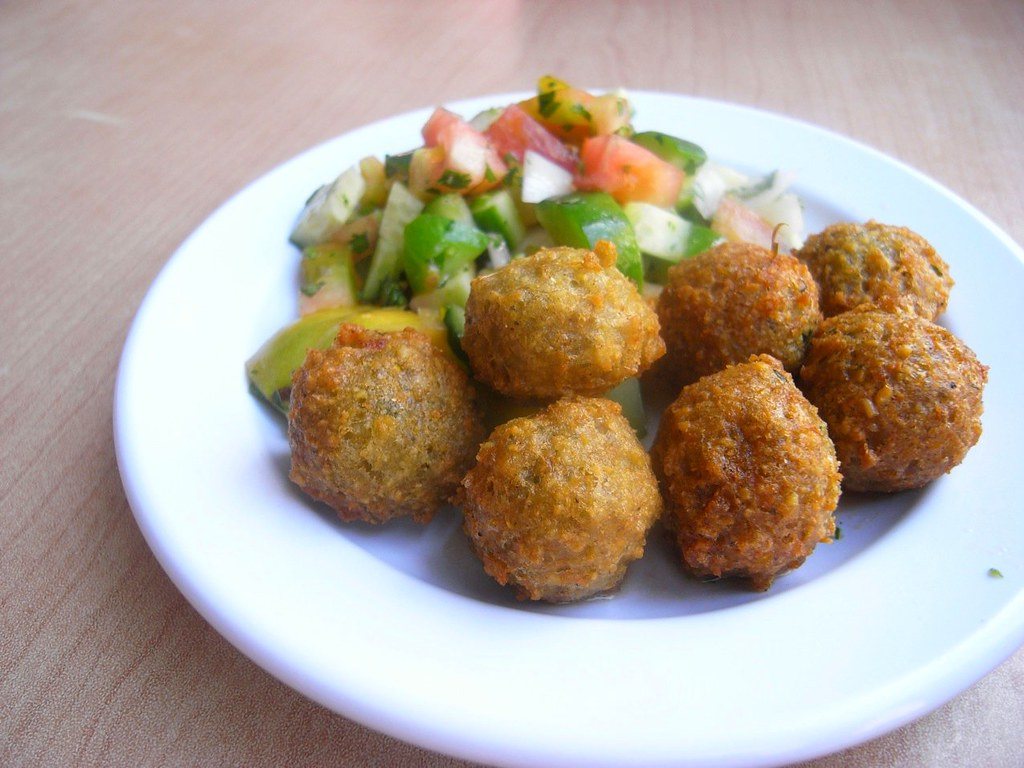
Great falafel is all about texture: a deeply golden shell that crackles, and an inside that is fluffy, herb-green and steaming. This falafel recipe gets you there the authentic way, using soaked raw chickpeas rather than canned, plenty of fresh parsley and coriander, and warm spices like cumin and coriander.
It might surprise you that the chickpeas are never cooked before frying. That is the secret of street-stall falafel in Cairo, Beirut and Amman. Soaked raw chickpeas have enough starch to bind the mixture without flour or egg, and they fry up light rather than dense and mushy.
Why This Recipe Works
If you have ever had falafel crumble in the oil or turn out heavy and dry, the culprit is usually canned chickpeas. They are cooked and wet, so the mixture needs lots of flour to hold together. Using dried, soaked chickpeas fixes that at the source.
- No flour, no egg: naturally vegan and gluten-free.
- Bright and herby: a generous amount of greens gives a vivid colour and fresh flavour.
- Light texture: a little baking powder makes the insides fluffy.
- Make-ahead: the mixture keeps in the fridge for a day and freezes well.
Ingredients and Why They Matter
- Dried chickpeas: the non-negotiable. Soak them in plenty of cold water for 18 to 24 hours; they will roughly double in size. Change the water once if your kitchen is warm.
- Fresh herbs: parsley and coriander give falafel its colour and freshness. A few mint leaves or dill are also lovely.
- Onion and garlic: provide savoury depth. Squeeze excess moisture from the onion if it is very juicy.
- Spices: cumin is the main flavour, supported by ground coriander and a little chilli heat.
- Baking powder: added at the last minute, it creates tiny air pockets for a fluffy inside.
- Tahini: the base of the classic sauce. Thin it with lemon and cold water until it drizzles.
Falafel Recipe: Crispy Outside, Fluffy Green Inside
Middle Eastern · Snack · Medium
Ingredients
- 250 g (1 1/4 cups) dried chickpeas, soaked in plenty of water for 18-24 hours
- 1 small onion, roughly chopped
- 4 garlic cloves
- 1 large handful (about 30 g) fresh parsley, leaves and tender stems
- 1 large handful (about 30 g) fresh coriander
- 1 green chilli (optional)
- 2 tsp ground cumin
- 1 tsp ground coriander
- 1/4 tsp cayenne or red chilli powder
- 1 1/4 tsp salt
- 1/2 tsp baking powder (add just before frying)
- 1 tbsp sesame seeds (optional)
- Oil for deep frying
- 4 tbsp tahini, 3 tbsp lemon juice, 1 small garlic clove and 4-5 tbsp cold water, for the sauce
Method
- Drain the soaked chickpeas very well and pat dry with a towel. Do not cook them.
- Put the chickpeas, onion, garlic, parsley, coriander, chilli, cumin, ground coriander, cayenne and salt in a food processor.
- Pulse in short bursts, scraping down the sides, until the mixture looks like coarse, damp sand and holds together when pressed. Do not blend to a paste.
- Transfer to a bowl, cover and refrigerate for at least 30 minutes, or up to a day.
- For the sauce, whisk tahini, lemon juice, crushed garlic and a pinch of salt, adding cold water until smooth and pourable.
- Just before frying, stir the baking powder and sesame seeds into the falafel mixture. Shape into balls or small patties about 4 cm wide, pressing firmly.
- Heat oil to 175-180°C. Fry the falafel in batches for 3-4 minutes, turning, until deep golden brown and crisp.
- Drain on a wire rack and serve hot with the tahini sauce, salad and warm pita.
From Soaking to Frying: The Full Walkthrough
Soak properly
Plan ahead, because the long soak is what makes this falafel recipe work. Fully hydrated chickpeas grind into a mixture that holds together and cooks through in the time it takes the outside to brown. Under-soaked chickpeas give hard, gritty falafel.
Grind to the right texture
Pulse rather than blend continuously. You are aiming for a texture similar to couscous or damp sand that clumps when squeezed. A smooth paste fries up dense and gummy, while a mixture that is too coarse falls apart. Scrape down the bowl several times so everything is evenly ground.
Rest and chill
Cover the bowl tightly so the herbs do not darken. Chilling the mixture lets the starches hydrate and firms everything up. This makes shaping easier and helps the falafel keep their shape in the oil.
Shape and fry
Stir in the baking powder just before shaping. Use a falafel scoop, two spoons or damp hands, pressing firmly so each ball is compact. Fry a test falafel first: if it breaks apart, add a tablespoon of chickpea flour (besan) or plain flour to the mixture and try again. At around 175-180°C, falafel take three to four minutes to turn a deep brown. Go darker than you think; pale falafel are often soft inside.
Tips for Perfect Falafel
- Dry the soaked chickpeas well. Excess water is the main cause of falafel breaking up.
- Fry in small batches to keep the oil temperature steady.
- Small patties cook more evenly than large balls and are ideal for sandwiches.
- Drain on a wire rack to keep the crust crunchy all round.
- Serve immediately; falafel are at their best within minutes of frying.
- Season the tahini sauce well with salt and lemon. A bland sauce makes even perfect falafel taste flat, so taste it and adjust before serving.
Serving Ideas and Variations
The classic way is stuffed into warm pita with tahini sauce, chopped tomato and cucumber, pickled turnips, shredded lettuce and a little chilli sauce. For a platter, serve falafel with hummus, a fresh fattoush or tabbouleh salad and flatbread. They also make a great high-protein lunch bowl over rice or greens with a drizzle of tahini.
| Variation | How |
|---|---|
| Egyptian ta’ameya | Use soaked split fava beans instead of chickpeas, with extra herbs and dill. |
| Baked falafel | Shape into patties, brush with oil and bake at 200°C for 25 minutes, flipping halfway. |
| Air fryer falafel | Spray with oil and cook at 190°C for 12-15 minutes, turning once. |
| Spicy falafel | Add an extra green chilli and 1/2 tsp chilli flakes. |
Storage and Freezing
The raw mixture keeps for up to 24 hours in the fridge. To freeze, shape the falafel and freeze them on a lined tray, then bag them for up to 3 months. Fry from frozen at 170°C, adding a minute or two. Cooked falafel keep in the fridge for 3 days; reheat in an oven or air fryer at 180°C for 6-8 minutes to bring back the crunch.
Frequently Asked Questions
Can I use canned chickpeas?
You can, but you will need to add flour or breadcrumbs to bind them, and the texture will be softer and denser. For real falafel, dried and soaked chickpeas are the way to go.
Why does my falafel fall apart in the oil?
The mixture is usually too wet, too coarse or not chilled. Dry the chickpeas, pulse a little finer, chill for 30 minutes, and add a spoonful of chickpea flour if needed.
Is it safe to eat chickpeas that have not been cooked first?
Yes. The chickpeas cook fully in the hot oil because they are ground fine and shaped small. Make sure the falafel are browned all the way through and hot in the centre.
Can I make this falafel recipe without a food processor?
A meat grinder works traditionally and gives an excellent texture. A blender is harder, but possible if you work in small batches with a little pulsing.
Worth the Soak
The only real effort in this falafel recipe is remembering to soak the chickpeas the day before. After that, it is a quick blitz, a short rest and a few minutes of frying for crisp, fragrant falafel that taste just like the best street stalls. Wrap them in warm bread, drizzle with tahini and enjoy.