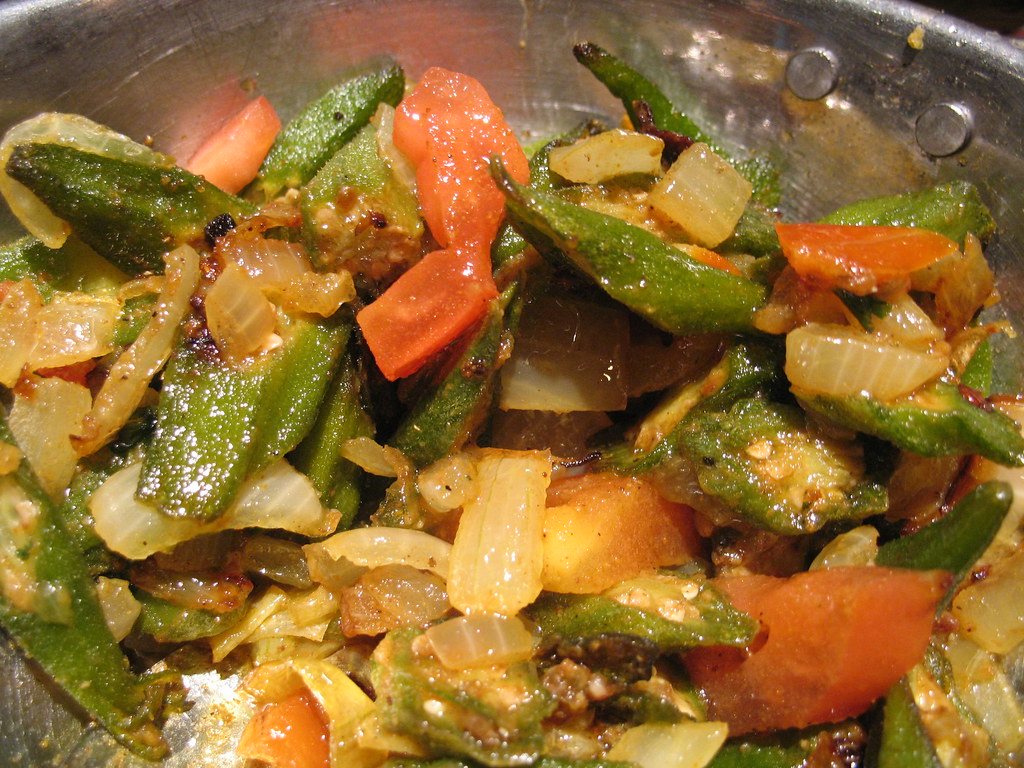
If okra has ever turned sticky and stringy in your pan, this bhindi masala recipe is the fix. The okra is fried on its own first, so it stays tender with lightly crisp edges, and only then is it folded into a quick onion and tomato masala. The result is a dry, glossy sabzi where every piece holds its shape.
It is the kind of everyday Pakistani vegetable dish that tastes far better than its short ingredient list suggests. A little dried mango powder at the end adds a gentle tang that wakes up the spices, and the whole thing is on the table in about 40 minutes.
Why You’ll Love This Recipe
- No slime: drying the okra well and frying it separately keeps the texture clean and pleasant.
- Weeknight friendly: one pan, pantry spices and very little hands-on fuss.
- Naturally vegan: no dairy, no meat, and it still feels like a proper main for a simple meal.
- Flexible heat: keep it mild for children or add extra green chillies for a fiery plate.
Start with good okra
The quality of your bhindi decides half the result. Look for small to medium pods, roughly the length of your finger, that are bright green and firm. Snap the tip of one: fresh okra breaks cleanly, while older pods bend and feel woody inside. Large, tough pods never soften properly, no matter how long you cook them.
Buy okra no more than a day or two before you plan to cook it, and keep it unwashed in a paper bag in the fridge until then.
Key Ingredients and Substitutions
Every item in this bhindi masala recipe is easy to find in a desi grocery, and most have simple swaps.
- Okra: fresh is best. Frozen cut okra works in a pinch; cook it straight from frozen in a hot pan so the extra moisture evaporates quickly.
- Onions: thinly sliced onions give soft, sweet strands through the dish. Red or white onions both work.
- Tomatoes: ripe tomatoes form the base of the masala. Two tablespoons of tomato paste with a splash of water can stand in when tomatoes are pale or expensive.
- Amchur: dried mango powder brings sourness without adding liquid, which matters for a dry sabzi. Lemon juice is a fine substitute, added off the heat.
- Oil: any neutral cooking oil is fine. Mustard oil, heated until it just smokes and then cooled slightly, gives a sharper, more rustic flavour.
Bhindi Masala Recipe: Dry, Non-Slimy Spiced Okra at Home
Pakistani · Side Dish · Easy
Ingredients
- 500 g fresh okra (bhindi), washed and dried completely
- 4 tbsp cooking oil, divided
- 1/2 tsp cumin seeds
- 2 medium onions, thinly sliced
- 1 tsp ginger-garlic paste
- 2 medium tomatoes, chopped
- 1 tsp salt, or to taste
- 1 tsp red chilli powder
- 1/2 tsp turmeric (haldi)
- 1 tsp ground coriander
- 1/2 tsp ground cumin
- 1 tsp dried mango powder (amchur) or 1 tbsp lemon juice
- 1/2 tsp garam masala
- 2 green chillies, slit
- 2 tbsp chopped fresh coriander
Method
- Wash the okra and dry every piece thoroughly with a kitchen towel. Trim the tops and tails, then cut into 2 cm pieces.
- Heat 2 tbsp oil in a wide frying pan over medium-high heat. Add the okra in a single layer and fry, stirring only now and then, for 8 to 10 minutes until lightly browned and no longer sticky. Remove to a plate.
- In the same pan, heat the remaining 2 tbsp oil and add the cumin seeds. When they sizzle, add the sliced onions and cook for 5 to 6 minutes until soft and golden.
- Add the ginger-garlic paste and cook for 30 seconds, then add the tomatoes, salt, chilli powder, turmeric, ground coriander and ground cumin.
- Cook the masala for 5 to 6 minutes, stirring, until the tomatoes break down and oil starts to separate at the edges.
- Return the fried okra to the pan with the green chillies. Toss gently to coat, cover and cook on low heat for 3 to 4 minutes.
- Uncover, sprinkle with amchur and garam masala, toss once more and cook for 1 minute. Finish with fresh coriander and serve hot.
Step-by-Step Guide
Prepare the okra properly
Wash the okra whole, before cutting, then spread it on a clean towel and pat each pod dry. If you have time, leave it to air-dry for 20 to 30 minutes. Any water clinging to the pods will mix with the natural sap released when you cut them, and that is where the sliminess starts. Use a dry knife and a dry board, trim the ends and cut into even pieces so they cook at the same rate.
Fry the bhindi first
Use your widest pan and keep the heat fairly high. The okra should sit in a single layer; if your pan is small, fry it in two batches. Stir only every minute or so, because constant stirring breaks the pieces and releases more sap. You will see thin white threads at first. Keep going, and within a few minutes they dry out and the edges turn golden. Do not add salt at this stage, as salt draws out moisture and makes the okra soggy.
Build the masala
Cumin seeds go into hot oil first, followed by the onions. Let the onions turn properly golden rather than just soft, since their sweetness balances the tang later. Add the ginger-garlic paste and stir for a few seconds before the tomatoes and powdered spices go in. Cook until the mixture looks jammy and you can see oil shimmering at the sides of the pan. This is the sign the raw spice taste has gone.
Bring it together
Return the okra and toss with a light hand. A short covered rest on low heat lets the okra absorb the masala without steaming into mush. Finish with amchur and garam masala, which keep their aroma best when added at the very end.
Tips for the Best Results
- Never cover the pan during the first fry. Trapped steam is the fastest route to sticky okra.
- Add salt only once the okra goes back into the masala.
- If the masala catches on the bottom, add a tablespoon of water rather than more oil, then cook it off.
- Taste before serving. A pinch more amchur often makes the difference between good and great.
Variations to Try
Bhindi aloo: add one diced potato, fried until golden, along with the okra for a heartier sabzi. Bhindi gosht style: fold the fried okra into leftover mutton or beef curry for the last 10 minutes of cooking. Kurkuri bhindi: slice the okra lengthwise, toss with gram flour and spices, and deep-fry for a crunchy snack. Dahi bhindi: stir in 3 tablespoons of whisked yogurt off the heat for a mild, creamy finish.
You can also swap the onions for shallots, or add a teaspoon of crushed fennel seeds with the cumin for a slightly sweet, aromatic note.
Serving Suggestions and Storage
Serve this spiced okra with hot chapati, paratha or tandoori roti, or spoon it alongside daal and plain rice for a comforting vegetarian dinner. A bowl of cool raita and some sliced onions with lemon round out the plate nicely.
Leftovers keep in an airtight container in the fridge for up to 2 days. Reheat in a dry frying pan over medium heat rather than the microwave, which tends to make okra soft. Freezing is not recommended, as the texture suffers once thawed.
Frequently Asked Questions
Why is my bhindi slimy?
Usually because the okra was wet when cut, the pan was crowded, the lid went on too early, or salt was added at the start. Fix all four and the problem largely disappears.
Can I make this bhindi masala recipe in an air fryer?
Yes. Toss the cut okra with one tablespoon of oil and air fry at 200°C (400°F) for 10 to 12 minutes, shaking halfway, then add it to the cooked masala.
Should I add vinegar or lemon to stop sliminess?
A splash of acid does help a little, but drying and frying matter much more. Keep the lemon or amchur for flavour at the end.
Can I cook it without onions and garlic?
You can. Use a pinch of asafoetida (hing) in the hot oil with the cumin and rely on tomatoes and spices for depth.
How spicy is it?
Moderate. With one teaspoon of chilli powder and two green chillies it has a pleasant warmth; halve both for a mild version.
Final Thoughts
Once you see how easy it is to keep okra crisp and clean, this bhindi masala recipe tends to become a regular on the weekly menu. Dry the pods well, give them space in the pan, and save the salt and tang for the end. That small bit of care turns a humble vegetable into something everyone reaches for first.