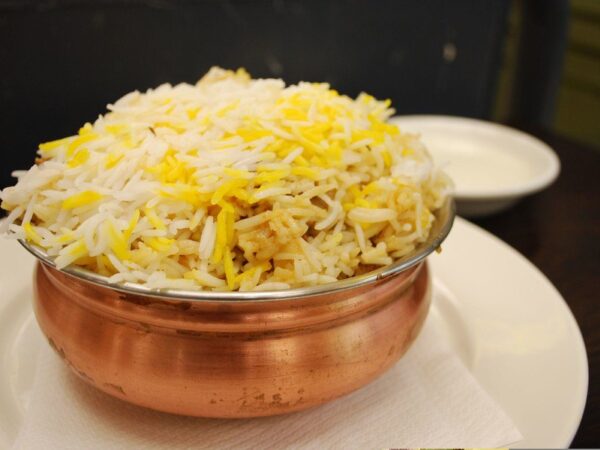
Bright yellow, glistening with ghee and studded with nuts, raisins and jewel-like cherries, zarda is the sweet rice that appears at weddings, Eid lunches and family celebrations across Pakistan. This zarda recipe produces long, separate grains of basmati that are sweet but not sugary, fragrant with cardamom and saffron, and finished with a generous scattering of dried fruit.
The method follows the classic approach: boil the rice until nearly done, then cook it gently with sugar syrup and ghee on dum until the syrup is absorbed and every grain glows. A few small tricks, like adding lemon juice to the boiling water and layering the sugar instead of stirring it in, make the difference between clumpy rice and the festive, fluffy zarda you remember.
A Festive Sweet With Simple Steps
Zarda looks elaborate, but it is one of the easier desi desserts to get right. It needs no special equipment, no oven and no tricky techniques. Its colour and aroma make it a natural centrepiece, and it can be made a few hours ahead and served warm or at room temperature, which is perfect when you are cooking for a crowd.
The name comes from the Persian word for yellow, and the dish has been part of South Asian celebration meals for centuries. Every family has its own version: some add khoya, some add chum chum or coloured sweets, others keep it simple with nuts and raisins. This zarda recipe gives you a reliable base you can dress up however you like.
What You Need to Know Before You Start
Use good aged basmati, and handle it gently once cooked. The grains are long and delicate, and sugar makes them softer still, so avoid vigorous stirring at every stage. Measure the sugar carefully: zarda should be sweet, but too much syrup turns it sticky. A ratio of roughly one part sugar to two parts uncooked rice by weight suits most tastes; adjust by a few spoons next time if you want it sweeter.
Zarda Recipe: Festive Sweet Saffron Rice with Nuts and Raisins
Pakistani · Dessert · Easy
Ingredients
- 400 g (2 cups) aged basmati rice
- 200 g (1 cup) granulated sugar
- 5 tbsp (75 g) ghee
- 6 green cardamom pods, divided
- 4 cloves
- 1/4 tsp food-safe yellow zarda colour (optional)
- 1 tbsp lemon juice
- 1/4 tsp saffron soaked in 3 tbsp warm milk
- 1/2 tsp kewra water
- 30 g almonds, sliced
- 30 g pistachios, sliced
- 20 g cashews
- 2 tbsp desiccated coconut
- 40 g (1/4 cup) raisins
- 8–10 glacé cherries, halved
- 50 g khoya, crumbled (optional)
Method
- Rinse the rice until clear and soak for 30 minutes. Drain.
- Boil plenty of water with the zarda colour, 3 cardamom pods and lemon juice. Add the rice and boil 6–7 minutes until about 80% cooked. Drain well.
- Heat ghee in a heavy pot. Add cloves and remaining cardamom, then the nuts and coconut. Fry 1 minute and remove half for garnish.
- Layer half the rice, half the sugar, the remaining rice and the rest of the sugar. Drizzle with saffron milk and kewra. Do not stir.
- Cover and cook on low for 5 minutes until the sugar melts. Fold gently once.
- Add raisins, cherries and khoya. Cover and cook on a tawa over the lowest heat for 15–20 minutes until the syrup is absorbed.
- Garnish with the reserved nuts and serve warm.
Ingredients and Their Roles
- Basmati rice: Aged long-grain basmati for separate, elegant grains.
- Sugar: White granulated sugar dissolves cleanly and keeps the colour bright.
- Ghee: Essential for flavour and shine. Butter can stand in, though the taste is less nutty.
- Saffron and yellow colour: Saffron gives aroma and a natural golden tint. Many cooks add a pinch of food-safe yellow or orange zarda colour to the boiling water for the classic vivid look.
- Green cardamom and cloves: Fried in the ghee for warm fragrance.
- Nuts and dried fruit: Almonds, pistachios, cashews, raisins and desiccated coconut. Lightly fry them in ghee to bring out their flavour.
- Glacé cherries or murabba: Optional but traditional for colour.
- Khoya (optional): Crumbled over the top before dum for a richer, milkier finish.
- Kewra water: A few drops add the floral note found in wedding-style zarda.
Making Zarda, One Stage at a Time
Soak and boil
Rinse the rice until the water runs clear and soak for 30 minutes. Bring a large pot of water to a rolling boil with the zarda colour, a few cardamom pods and a squeeze of lemon juice. The lemon helps keep the grains separate and the colour bright. Add the drained rice and boil for six to seven minutes, until about 80 percent cooked: soft on the outside but with a slight bite in the centre. Drain well.
Fry the spices and nuts
In a heavy pot, warm the ghee and add the cloves and remaining cardamom. Add the nuts and coconut and fry for a minute until lightly golden, then lift out about half for garnish.
Layer with sugar
Add half the rice to the pot over the spiced ghee. Sprinkle half the sugar evenly over it, then add the rest of the rice and finish with the remaining sugar. Drizzle the saffron milk and kewra water on top. Do not stir; the sugar will melt into syrup as it heats.
Dum until glossy
Cover tightly and cook over low heat for about five minutes until the sugar melts and you see syrup bubbling at the edges. Now gently fold the rice once with a flat spoon so the syrup is evenly distributed. Add the raisins, cherries and khoya if using, cover again, place the pot on a flat tawa and cook on the lowest heat for 15 to 20 minutes, until all the syrup is absorbed and the grains are tender and shiny.
Tips, Variations and Serving Ideas
- Do not overboil the rice. It continues to soften in the syrup, so undercooking slightly at the boiling stage is crucial.
- If the rice looks dry before the grains are tender, sprinkle two or three tablespoons of hot water over the top and continue on dum.
- Too wet? Remove the lid for the last few minutes to let excess moisture escape.
- Multicoloured zarda: Divide the boiled rice and tint portions with different food colours before layering.
- Mutanjan style: Add small pieces of colourful sweets and more khoya for a richer, more decorative dish.
Serve the finished zarda warm, piled on a platter and topped with the reserved nuts and a few cherries. It pairs beautifully with a biryani or pulao meal and is often served alongside a meaty main at weddings. A small bowl of cold kheer or plain cream on the side is a lovely contrast.
Storage and Reheating
Zarda keeps in an airtight container in the fridge for up to three days. Reheat gently in a covered pan over low heat with a splash of water, or microwave covered in short bursts until hot all the way through. Cooked rice should be cooled and refrigerated within an hour and reheated only once. It also freezes well for up to a month; thaw overnight in the fridge.
Frequently Asked Questions
Why did my zarda become sticky?
The rice was likely overcooked during boiling or stirred too much after the sugar was added. Undercook slightly and fold only once.
Can I make this zarda recipe without food colour?
Yes. Use extra saffron soaked in warm milk for a natural golden shade. The colour will be softer but the aroma is wonderful.
Can I reduce the sugar?
You can reduce it by up to a quarter, but the rice will be less glossy. Add a few more raisins for natural sweetness.
Can I use brown sugar or jaggery?
Jaggery makes a different traditional dish called gur wale chawal, with a darker colour and caramel taste. It is delicious, but it will not look like classic zarda.
A Sweet Finish
This zarda recipe brings colour, fragrance and a sense of celebration to any table. Make it for Eid, a family gathering, or simply when you want something sweet and special to finish a meal.