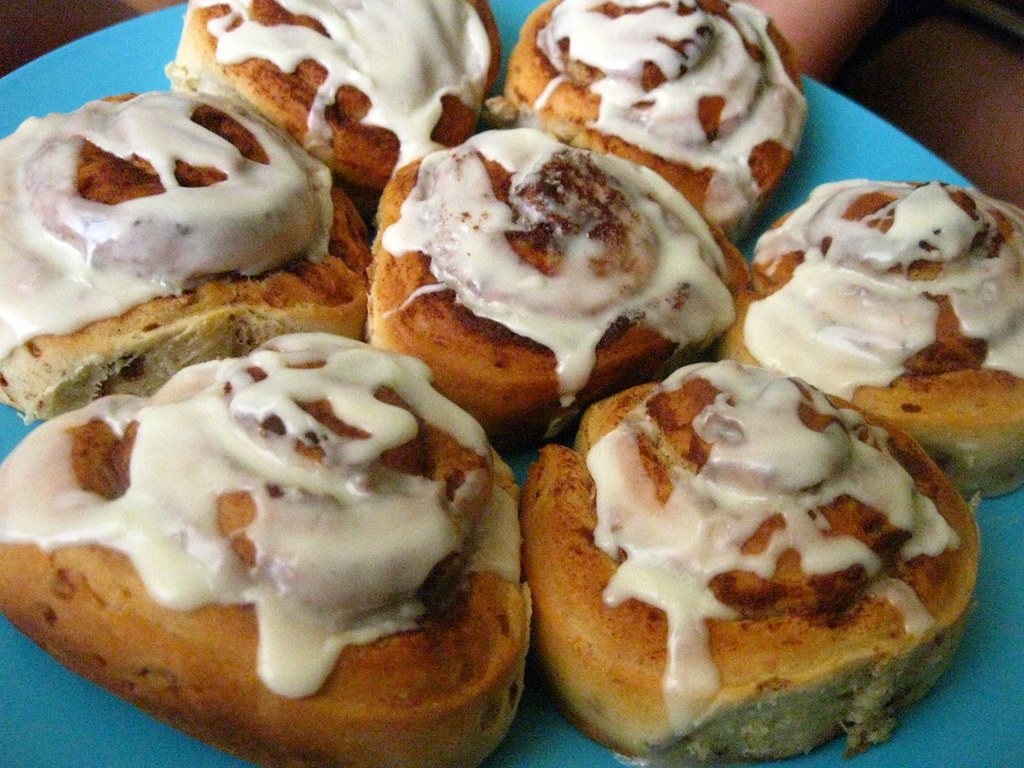
There is something special about pulling a tray of warm cinnamon rolls from the oven, the kitchen filled with the scent of butter and spice. This cinnamon rolls recipe produces tall, soft rolls with a gooey brown sugar swirl in every layer and a tangy cream cheese icing that melts into the cracks.
The dough is enriched with milk, eggs and butter, which gives a light, feathery texture similar to the best bakery rolls. A thick paste-style filling stays inside the spiral instead of leaking out, and an optional overnight rise means you can wake up and bake them fresh for breakfast or a weekend brunch with family.
Why This Recipe Is a Keeper
- Bakery softness at home. The enriched dough stays tender for a couple of days.
- Filling that stays put. Mixing very soft butter with the sugar and cinnamon creates a paste that clings to the dough.
- Balanced sweetness. The cream cheese icing brings a tang that cuts through the rich filling.
- Make-ahead friendly. Shape the rolls the evening before and bake them in the morning.
Getting the Ingredients Right
- Flour: Bread flour gives taller, slightly chewier rolls; plain flour makes them softer and more tender. Both work well.
- Brown sugar: Light brown sugar gives a caramel note and that gooey texture. Dark brown sugar is even richer. White sugar works but tastes flatter.
- Cinnamon: Use fresh ground cinnamon; old spice loses its aroma. For a warmer flavour, add a pinch of ground cardamom or nutmeg.
- Butter: Unsalted gives you control over seasoning. If you only have salted, skip the pinch of salt in the filling.
- Cream cheese: Full-fat block cream cheese gives the thickest icing. For a simple glaze instead, whisk the icing sugar with milk and vanilla.
- Eggs: They add richness and structure. For an eggless dough, replace each egg with 50 ml extra milk plus a tablespoon of extra butter.
Cinnamon Rolls Recipe: Soft, Gooey Rolls with Cream Cheese Icing
American · Dessert · Medium
Ingredients
- Dough: 500 g plain or bread flour (about 4 cups)
- 7 g instant yeast (2 1/4 tsp)
- 60 g granulated sugar (1/4 cup plus 1 tbsp)
- 1 tsp salt
- 240 ml whole milk (1 cup), warmed to about 40°C
- 2 large eggs, at room temperature
- 70 g unsalted butter (5 tbsp), softened
- Filling: 85 g unsalted butter (6 tbsp), very soft
- 150 g light brown sugar (3/4 cup, packed)
- 1 1/2 tbsp ground cinnamon
- Pinch of salt
- Icing: 115 g cream cheese (1/2 cup), softened
- 30 g unsalted butter (2 tbsp), softened
- 120 g icing sugar (1 cup)
- 1/2 tsp vanilla extract
- 1 to 2 tbsp milk, as needed
Method
- Mix the flour, yeast, sugar and salt. Add the warm milk and eggs and mix into a dough, then knead in the softened butter and continue for 8 to 10 minutes until smooth and slightly tacky.
- Cover and let rise in a warm place for 1 to 1 1/2 hours until doubled.
- Mix the filling butter, brown sugar, cinnamon and salt into a smooth paste.
- Roll the dough into a 40 x 30 cm rectangle on a lightly floured surface. Spread the filling evenly, leaving a 1 cm strip bare on one long side.
- Roll up tightly from the long filled side and pinch the seam. Cut into 12 rolls with unflavoured dental floss or a sharp knife.
- Place in a greased 23 x 33 cm (9 x 13 inch) tin, cover and rise for 45 to 60 minutes until puffy and touching.
- Bake at 180°C (160°C fan, 350°F) for 22 to 26 minutes until golden; the centre should reach about 88°C (190°F).
- Beat the cream cheese, butter, icing sugar and vanilla until smooth, adding milk to loosen.
- Cool the rolls for 10 minutes, then spread the icing over while still warm and serve.
The Method, Explained
Kneading the Dough
Enriched doughs start out sticky, especially once the butter goes in. Keep kneading rather than adding lots of flour; the dough will gradually become smooth and elastic. In a stand mixer, use a dough hook on medium-low speed. By hand, expect about twelve minutes. The dough is ready when it stretches thinly without tearing straight away.
The First Rise
Cover the bowl and leave it somewhere warm. Rising times vary with room temperature, so judge by size rather than the clock. Doubled in volume and soft and airy to the touch is the goal.
Rolling and Filling
Roll the dough into an even rectangle; uneven thickness leads to rolls that bake unevenly. Spread the filling right to three edges, leaving a bare strip along one long side so the seam can seal. A thin, even layer is better than a thick mound in the middle.
Rolling Up and Cutting
Roll firmly but without stretching the dough, keeping the log even in thickness. Unflavoured dental floss gives the cleanest cut: slide it under the log, cross the ends over the top and pull. A sharp serrated knife works too, using a gentle sawing motion. Trim the ends first if they are thin, then cut twelve even pieces.
Second Rise and Baking
Arrange the rolls with a little space between them; they will expand to fill the tin. When they are puffy and touching, bake until golden on top. If the tops brown too quickly, lay a sheet of foil loosely over the tin for the last few minutes. An instant-read thermometer in the centre roll is the most reliable doneness test.
Tips for Gooey, Fluffy Rolls
- Make sure the filling butter is very soft, almost spreadable like cream cheese.
- Do not over-bake. Rolls that are golden but still soft in the centre stay gooey.
- Pour 60 ml warm cream over the rolls before baking for an extra-gooey, caramel-like base.
- Ice the rolls while warm, not hot, so the icing melts slightly without sliding off completely.
Overnight and Freezer Options
For an overnight bake, shape the rolls, place them in the tin, cover tightly and refrigerate for up to 16 hours. In the morning, let them stand at room temperature for 45 to 60 minutes until puffy, then bake as normal.
To freeze, place the shaped, unbaked rolls in the tin, wrap well and freeze for up to two months. Thaw overnight in the fridge, then let them rise at room temperature before baking. Baked rolls, iced or not, also freeze well wrapped individually.
Variations and Serving
This cinnamon rolls recipe is easy to customise. Scatter chopped walnuts or pecans over the filling, add a handful of raisins, or replace half the cinnamon with ground cardamom for a desi-inspired twist. An orange zest icing, made with orange juice instead of milk, gives a bright, fresh finish. For apple cinnamon rolls, add finely diced apple to the filling.
Serve warm with coffee, chai or a glass of cold milk. They make a lovely centrepiece for a weekend brunch or a festive breakfast table.
Leftovers keep in an airtight container at room temperature for up to two days, or in the fridge for up to four days because of the cream cheese icing. Warm each roll in the microwave for 15 to 20 seconds to bring back its softness.
Cinnamon Roll FAQs
Why did my filling leak out?
Melted butter or a loosely rolled log is usually to blame. Use very soft butter mixed into a paste and roll the dough snugly.
Can I make this cinnamon rolls recipe without a stand mixer?
Yes. Knead by hand for about twelve minutes. A bench scraper helps manage the sticky dough in the early stages.
Why are my rolls dry?
Too much flour, over-baking or skipping the full second rise can all lead to dry rolls. Weigh your flour and pull them out as soon as they are golden.
Can I use active dry yeast?
Yes. Use the same amount and dissolve it in the warm milk with a pinch of sugar for five to ten minutes until foamy before adding.
Bake these once and this cinnamon rolls recipe will likely become your go-to for birthdays, holidays and slow weekend mornings.