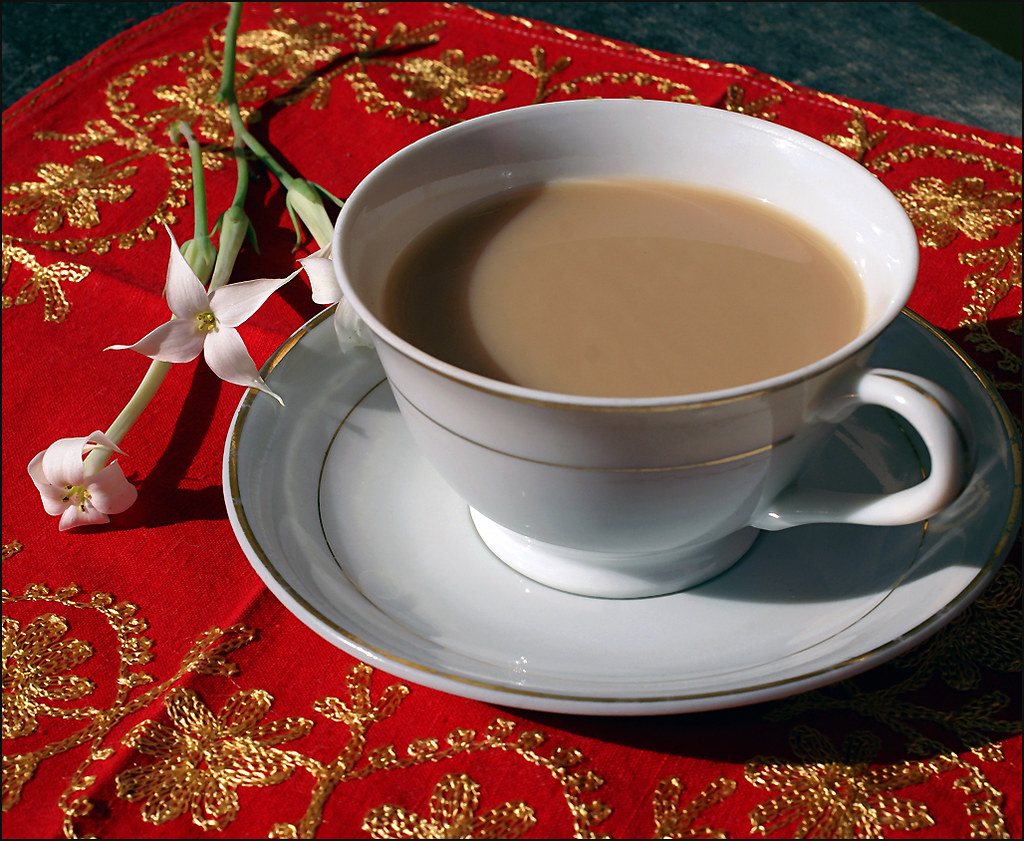
In Pakistan, tea is not just a drink but the rhythm of the day, and doodh patti chai is the version most people grow up with. Unlike tea made with water and topped up with a splash of milk, doodh patti chai is brewed almost entirely in milk, simmered with strong black tea leaves until it turns a deep, creamy caramel colour.
This method gives you that roadside dhaba flavour at home: bold, slightly malty, gently sweet and comforting. A small splash of water at the start helps the leaves release their colour before the milk goes in, and a patient simmer does the rest. It takes about ten minutes and one saucepan.
What Makes Doodh Patti Different
The name says it all: doodh means milk and patti means leaves. Because the tea is cooked directly in milk, the milk proteins and sugars caramelise slightly during simmering, giving a fuller, rounder taste than ordinary milky tea. The long simmer also pulls more strength from the leaves, so the result is robust enough to stand up to sugar and still taste clearly of tea.
It is the chai of offices, college canteens, train platforms and family gatherings, usually served in small cups with rusk, biscuits or a plate of samosas. Making it well at home is simply a matter of getting the ratios right and giving it enough time.
The Ingredients and Why They Matter
- Loose black tea: Granulated CTC tea, the small round pellets common in Pakistani households, is ideal. It brews quickly and gives strong colour and body. Assam-based blends also work. Tea bags are fine in a pinch; use two or three per cup and squeeze them before removing.
- Whole milk: Full-fat milk gives the creamiest chai. Semi-skimmed works but tastes thinner. For an extra-rich cup, replace a little of the milk with evaporated milk.
- A little water: Boiling the leaves briefly in water first helps them bloom and release their colour, which can be harder in thick milk alone.
- Sugar: Chai is traditionally sweet. Start with two teaspoons for two cups and adjust. Some prefer to add sugar in each cup instead.
- Cardamom: Optional but popular. Lightly crush the pods so their aroma escapes. Some families add a thin slice of ginger in winter.
Doodh Patti Chai Recipe: Strong, Creamy Pakistani Milk Tea
Pakistani · Drink · Easy
Ingredients
- 400 ml whole milk (about 1 2/3 cups)
- 80 ml water (1/3 cup)
- 2 1/2 tsp strong loose black tea, such as granulated CTC tea
- 2 to 3 tsp sugar, to taste
- 2 green cardamom pods, lightly crushed (optional)
Method
- Pour the water into a small saucepan, add the tea leaves and crushed cardamom, and bring to a boil over medium heat. Boil for 1 minute until the water turns very dark.
- Add the milk and sugar and stir.
- Bring to a boil, watching closely so it does not boil over. When it rises, lower the heat.
- Simmer gently for 4 to 6 minutes, stirring now and then, until the tea turns a deep caramel colour.
- For a frothy, dhaba-style finish, ladle the chai up and pour it back into the pan from a height several times.
- Strain into cups and serve hot.
Brewing It Step by Step
Blooming the Leaves
Start with the tea leaves in a small amount of boiling water. Within a minute the water turns almost black. This short boil sets the colour and strength for the whole pot.
Adding Milk and Sugar
Pour in the milk and sugar and bring everything back to the boil. Milk can rise and spill over in seconds, so stay close and lower the heat as soon as it starts to climb. Many cooks let it rise two or three times, lowering the heat each time, which helps deepen the colour.
The Simmer
Now let it simmer gently for several minutes. This is where the magic happens. The colour shifts from pale beige to a rich, tan-caramel shade, and the flavour becomes deeper and smoother. If it looks too pale, give it another minute or two, or add a pinch more tea next time.
Aerating
Dhaba chai makers often pour the tea from a height between two pots or ladle it up and let it fall back into the pan. This cools it slightly, mixes in air and creates a light froth. At home, three or four ladlefuls poured from a height do the trick.
Getting the Ratio Right
| Cups | Milk | Water | Tea leaves | Sugar |
|---|---|---|---|---|
| 1 | 200 ml | 40 ml | 1 1/4 tsp | 1 to 1 1/2 tsp |
| 2 | 400 ml | 80 ml | 2 1/2 tsp | 2 to 3 tsp |
| 4 | 800 ml | 150 ml | 5 tsp | 4 to 6 tsp |
Adjust the tea to taste. If you like it very strong, as many people do, add an extra half teaspoon per cup.
Tips for a Great Cup
- Use a heavy-based pan so the milk does not scorch on the bottom.
- Do not walk away when the milk is coming to the boil. It rises fast.
- Simmer on low rather than boiling hard, which can make the tea bitter.
- Strain through a fine tea strainer to catch all the small CTC grains.
- If the chai develops a skin while it sits, simply stir it back in or skim it off.
Serving Ideas and Variations
Doodh patti chai is a natural partner for rusks, cake rusk, nan khatai, biscuits, pakoras and samosas. In the morning, it goes perfectly with paratha and omelette. On a rainy afternoon, nothing beats a hot cup with a plate of fresh pakoras.
For masala chai, add a small piece of cinnamon, a clove and a slice of ginger with the cardamom. Elaichi chai uses four or five pods for a stronger cardamom flavour. For a sugar-free cup, simply skip the sugar; the caramelised milk gives a natural sweetness. You can also make it with full-fat oat milk, though it should be simmered more gently because plant milks can split.
Chai is best freshly made. If you have some left, refrigerate it for up to a day and reheat gently on the hob, though the flavour will be stronger and slightly more bitter.
Frequently Asked Questions
What tea is best for doodh patti chai?
Strong, granulated black tea such as CTC blends works best because it releases colour and flavour quickly and holds up to the milk.
Why is my chai pale?
There may be too little tea, too short a simmer, or a weaker tea variety. Add more leaves or simmer longer for a deeper colour.
Can I make doodh patti chai without any water?
Yes. Some people brew it in pure milk. Simmer slightly longer and stir often so the leaves release their colour without the milk catching on the bottom.
Can I make it with powdered milk?
Yes. Mix the milk powder with water according to the packet to make the equivalent amount of milk, then follow the recipe as written.
Once you have the method down, doodh patti chai becomes a small daily ritual: a few minutes at the stove for a cup that tastes like home.