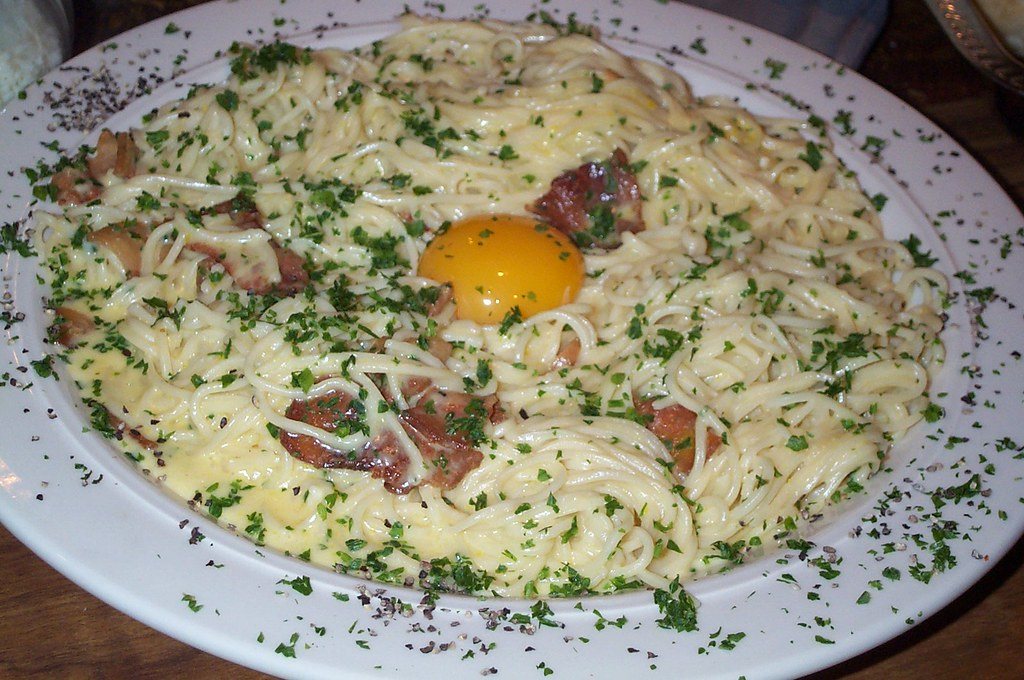
This spaghetti carbonara recipe shows how four or five simple ingredients can turn into one of the most satisfying pasta dishes in the world. Eggs, hard cheese, black pepper and crisp cured meat come together with starchy pasta water to make a sauce that is silky, rich and clinging, with no cream at all.
What makes this version reliable is technique rather than a long shopping list. You will learn how to mix the eggs off the heat so they thicken into a smooth coating instead of scrambling, and how to use pasta water to fine-tune the texture. There are also halal-friendly swaps for anyone who does not eat pork.
Why This Carbonara Works
Carbonara is a dish of balance. The cured meat brings salt and savoury fat, the cheese adds sharpness, the black pepper gives warmth, and the eggs bind it all into a sauce. The trick is gentle heat. Egg yolks start to thicken at around 65°C and set firm a little higher, so the sauce must be finished using the heat of the pasta and pan rather than a hot burner.
- Ready in about 25 minutes with one pot and one pan.
- No cream, so the flavour is cleaner and more intense.
- Easy to scale down for a quick dinner for two.
Ingredients and Substitutions
- Spaghetti: A good bronze-cut dried spaghetti has a rougher surface that grabs the sauce. Rigatoni, bucatini and tonnarelli are also traditional.
- Guanciale: Cured pork cheek is the classic choice, with lots of sweet fat. Pancetta is the easiest substitute. For a halal carbonara, use beef bacon, smoked turkey rashers or thinly sliced beef pastrami, and add a tablespoon of olive oil because these are leaner.
- Eggs: Whole eggs plus extra yolks give richness without the sauce becoming heavy. Room-temperature eggs blend more smoothly.
- Cheese: Pecorino Romano is sharp and salty; Parmesan is nuttier and milder. A mix of both is forgiving and delicious. Grate it very finely so it melts instantly.
- Black pepper: Crack it fresh and coarsely. It is a main flavour here, not just seasoning.
Spaghetti Carbonara Recipe: Silky, Creamy and No Cream Needed
Italian · Main Course · Medium
Ingredients
- 400 g dried spaghetti
- 150 g guanciale or pancetta, cut into small strips (or halal beef bacon or smoked turkey)
- 3 large eggs plus 2 egg yolks, at room temperature
- 60 g (about ¾ cup) finely grated Pecorino Romano
- 40 g (about ½ cup) finely grated Parmesan (Parmigiano Reggiano)
- 1½ tsp freshly cracked black pepper, plus extra to serve
- 1 tbsp olive oil (only if your meat is lean)
- Salt for the pasta water
Method
- Bring a large pot of water to the boil and salt it lightly (the cheese and cured meat are already salty).
- In a bowl, whisk the eggs, yolks, both cheeses and most of the black pepper into a thick paste.
- Put the guanciale in a cold, wide frying pan, then cook over medium-low heat for 8 to 10 minutes until the fat has rendered and the pieces are golden and crisp. Turn off the heat.
- Meanwhile, cook the spaghetti until just al dente, about 1 minute less than the packet time. Reserve 250 ml (1 cup) of the cooking water before draining.
- Add the drained spaghetti to the pan with the guanciale and its fat and toss well for 30 seconds off the heat so the pan cools slightly.
- Loosen the egg mixture with 2 to 3 tbsp of hot pasta water, then pour it over the pasta.
- Toss and stir quickly and continuously, adding splashes of pasta water, until the sauce turns glossy and coats every strand. If it is too runny, set the pan over very low heat for a few seconds while tossing.
- Serve immediately with extra pepper and grated cheese.
How to Make It, Stage by Stage
Render the meat slowly
Starting the guanciale in a cold pan lets the fat melt out gradually so the pieces become crisp on the outside but still slightly chewy inside. If you start in a very hot pan, the outside burns before the fat renders. Once golden, turn off the heat and leave the meat and fat in the pan. That fat is part of the sauce.
Make the egg and cheese paste
Whisk the eggs, yolks, cheeses and pepper into a thick, almost spreadable mixture. A thick paste is good; it means the sauce will have body. Just before adding it to the pasta, thin it with a little hot pasta water. This tempering step warms the eggs gently and helps prevent lumps.
Cook the pasta a little under
Use less water than usual if you can, as this concentrates the starch in the cooking water, which is what makes the sauce glossy. Pull the spaghetti out a minute early because it will keep softening while you toss it with the sauce.
Bring it together off the heat
Add the pasta to the pan with the meat and toss for about 30 seconds so the pan is hot but no longer sizzling. Pour in the egg mixture and keep everything moving with tongs. Add pasta water a splash at a time. Within a minute you should see the sauce turn from thin and yellow to creamy and glossy. If it looks loose, hold the pan over the lowest heat for a few seconds at a time while tossing. If it starts to look grainy, take it off and add more water immediately.
Tips for a Perfect Spaghetti Carbonara Recipe
- Do not add cream. It is not needed and it dulls the flavour. The creaminess comes from emulsified eggs, cheese, fat and starch.
- Salt the water lightly. Between the cured meat and cheese there is plenty of salt.
- Use a large pan. More surface area means faster, more even mixing.
- Serve on warm plates and eat straight away. Carbonara thickens as it cools.
- If you are cooking for pregnant guests, young children or anyone advised to avoid lightly cooked eggs, you can gently heat the sauce while tossing until it reaches 71°C (160°F), or use pasteurised eggs.
Variations to Try
A spoon of the meat fat whisked into the egg mixture gives an even richer sauce. For a smoky version, use smoked beef bacon or smoked turkey. Some cooks add a crushed garlic clove to the fat while it renders, then remove it before adding the pasta; it is not traditional but it is tasty. For a vegetarian twist, replace the meat with sautéed mushrooms or crispy courgette (zucchini) cooked in butter and olive oil. A small pinch of chilli flakes is a nice addition for anyone who likes heat.
Serving, Storage and Leftovers
Serve carbonara as a main course with a crisp green salad dressed in lemon and olive oil, which cuts through the richness nicely. Garlic bread is not traditional, but it is popular and nobody will complain.
Carbonara is best eaten fresh. Leftovers can be refrigerated in a covered container within an hour of cooking and eaten within 1 day. Reheat gently in a pan over low heat with a splash of water or milk, stirring constantly, until steaming hot. The texture will be thicker than when freshly made, but still enjoyable. Freezing is not recommended because the egg sauce turns grainy.
Frequently Asked Questions
Why did my eggs scramble?
The pan or pasta was too hot. Always take the pan off the heat and let it stop sizzling before adding the eggs, and keep tossing. Adding the tempered egg mixture with a splash of pasta water also helps.
Can I make carbonara without pork?
Yes. This spaghetti carbonara recipe works well with beef bacon, smoked turkey or beef pastrami. Since they render less fat, cook them in a tablespoon of olive oil to get enough fat for the sauce.
Can I use only Parmesan?
Absolutely. The sauce will be a little milder and slightly less salty. Use about 100 g in total.
Whole eggs or just yolks?
All yolks give the richest, most golden sauce; whole eggs give a lighter one. A mix, as here, gives the best balance and is less wasteful.
How do I fix a sauce that is too thick?
Add hot pasta water a tablespoon at a time and toss until it loosens. Keep some reserved water by the stove until you serve.
Ready to Cook
Once you have made this spaghetti carbonara recipe a couple of times, the timing becomes second nature. Render, whisk, boil, toss, and dinner is on the table in under half an hour. It is proof that a few great ingredients and the right technique are all you need.