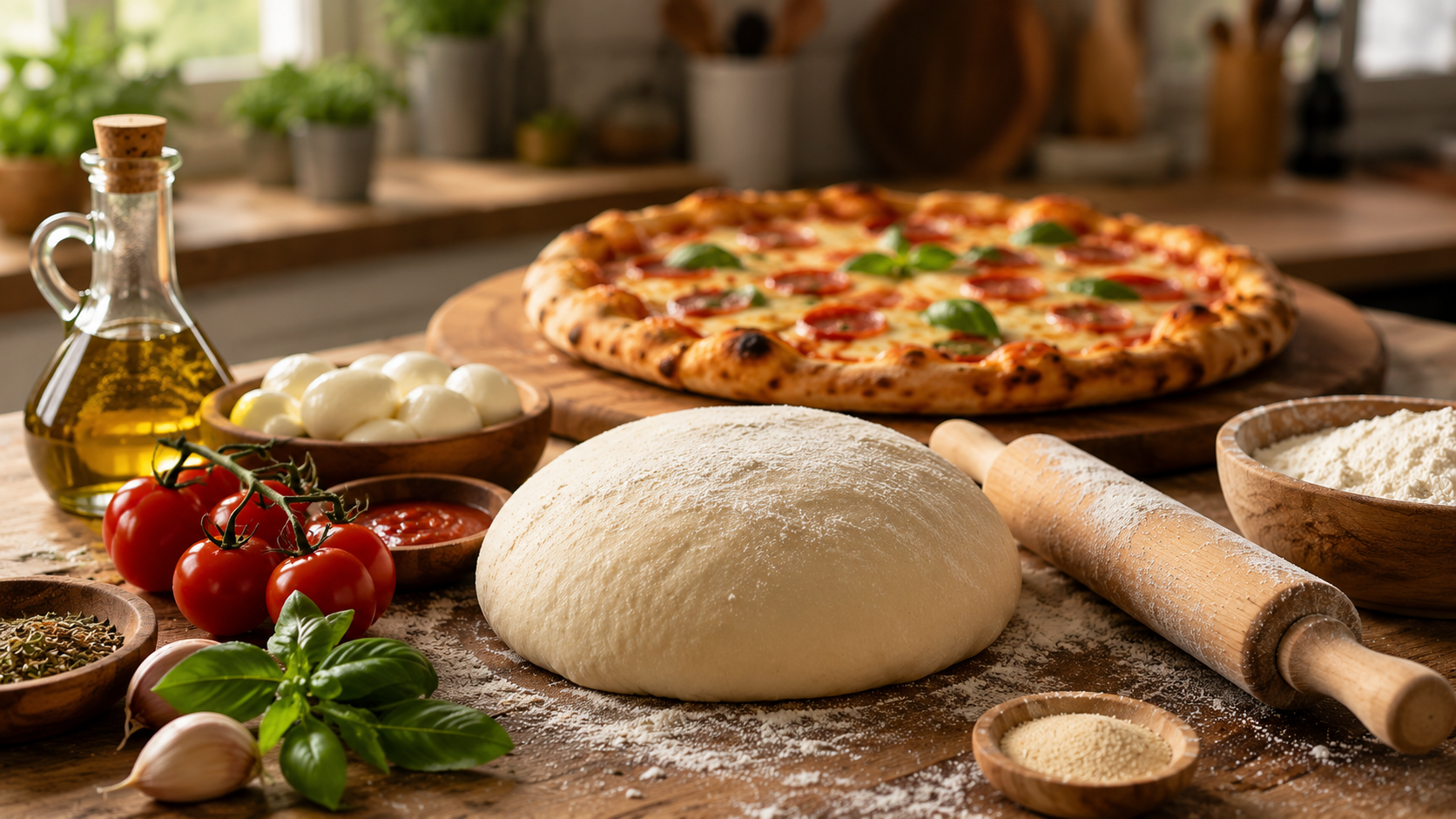
Nothing compares to the taste of freshly baked pizza made with homemade dough. While store-bought dough is convenient, preparing your own dough gives you complete control over the flavor, texture, and freshness. The best part is that you only need a few basic pantry ingredients to create a soft, chewy, and crispy pizza crust that rivals your favorite pizzeria.
This Homemade Pizza Dough Recipe is simple enough for beginners while producing professional-quality results. Whether you are making a classic Margherita pizza, pepperoni pizza, or loading your crust with vegetables and cheese, this recipe creates the perfect foundation for every pizza.
Why Make Homemade Pizza Dough?
Preparing your own pizza dough offers several advantages over ready-made alternatives.
Some of the biggest benefits include:
- Fresh ingredients with no unnecessary preservatives.
- Better flavor and texture.
- Easy to customize.
- Budget-friendly.
- Perfect for thin or thick crust pizza.
- Suitable for family pizza nights.
- Freezes well for future meals.
Moreover, homemade dough develops a richer flavor as it rises, making every bite more enjoyable.
Ingredients
Gather the following ingredients before starting.
- 3½ cups all-purpose flour
- 1¼ cups warm water
- 2¼ teaspoons active dry yeast (1 packet)
- 2 tablespoons olive oil
- 1 teaspoon sugar
- 1 teaspoon salt
These simple ingredients combine to create a soft and elastic dough that bakes beautifully.
Equipment You’ll Need
Preparing this Homemade Pizza Dough Recipe is easier with the right equipment.
- Large mixing bowl
- Measuring cups and spoons
- Wooden spoon or dough whisk
- Clean kitchen towel
- Rolling pin (optional)
- Pizza pan or baking stone
- Oven
Step 1: Activate the Yeast
Pour the warm water into a large mixing bowl.
Add the sugar and active dry yeast. Stir gently and allow the mixture to sit for about 5 to 10 minutes until it becomes foamy.
Foamy yeast indicates that the yeast is active and ready to use.
Step 2: Mix the Dough
Add the olive oil and salt to the yeast mixture.
Gradually mix in the flour, one cup at a time, until a soft dough begins to form.
Continue mixing until all the flour is incorporated.
Step 3: Knead the Dough
Transfer the dough onto a lightly floured surface.
Knead for approximately 8 to 10 minutes until the dough becomes smooth, soft, and elastic.
If the dough feels sticky, sprinkle in a small amount of additional flour. Avoid adding too much because this can make the crust dry.
Step 4: Let the Dough Rise
Lightly grease a clean bowl with olive oil.
Place the dough inside and cover it with a clean kitchen towel or plastic wrap.
Allow the dough to rise in a warm place for 60 to 90 minutes or until it doubles in size.
During this resting period, the yeast creates air pockets that give the pizza crust its light and chewy texture.
Step 5: Shape the Pizza Dough
Once the dough has doubled in size, gently punch it down to release the trapped air.
Transfer it to a lightly floured surface and divide it into two equal portions if making medium pizzas, or leave it whole for one large pizza.
Use your hands or a rolling pin to shape the dough into your preferred thickness. Thin crust pizzas require a thinner layer, while thick crust pizzas should be left slightly thicker around the edges.
Step 6: Add Your Favorite Toppings
Place the shaped dough onto a pizza pan or preheated pizza stone.
Spread an even layer of pizza sauce over the surface, leaving about one inch around the edge for the crust.
Top with shredded mozzarella cheese and your favorite toppings such as:
- Pepperoni
- Mushrooms
- Bell peppers
- Onions
- Black olives
- Grilled chicken
- Italian sausage
- Fresh basil
Avoid overloading the pizza with toppings, as too many ingredients may prevent the crust from baking evenly.
Step 7: Bake the Pizza
Preheat your oven to 475°F (245°C).
Bake the pizza for 12 to 15 minutes, or until the crust becomes golden brown and the cheese is melted and bubbling.
For an extra crispy crust, bake the pizza on a preheated pizza stone.
Tips for the Best Homemade Pizza Dough
Following a few simple tips can greatly improve your results.
- Use fresh active dry yeast.
- Measure ingredients accurately.
- Knead the dough thoroughly.
- Allow enough time for the dough to rise.
- Preheat the oven completely before baking.
- Use a pizza stone if available.
- Brush the crust with olive oil before baking.
- Let the pizza cool for two to three minutes before slicing.
Moreover, allowing the dough to rise slowly develops a richer flavor and creates a lighter texture.
Common Mistakes to Avoid
Many beginners make small mistakes that affect the final pizza.
Avoid these common errors:
- Using water that is too hot for the yeast.
- Adding excessive flour while kneading.
- Skipping the rising time.
- Overloading the pizza with toppings.
- Baking in a cold oven.
- Using expired yeast.
- Rolling the dough too thin.
Fortunately, avoiding these mistakes will help you create a bakery-quality pizza crust every time.
Frequently Asked Questions (FAQs)
Can I make pizza dough ahead of time?
Yes. You can refrigerate the dough for up to 3 days or freeze it for up to 3 months.
Can I freeze homemade pizza dough?
Absolutely. Wrap the dough tightly in plastic wrap and place it in a freezer-safe bag before freezing.
Why didn’t my pizza dough rise?
Inactive yeast, cold temperatures, or insufficient rising time are the most common reasons.
Can I use bread flour instead of all-purpose flour?
Yes. Bread flour creates a chewier crust because of its higher protein content.
How do I make my pizza crust crispy?
Bake the pizza at a high temperature, preheat the pizza stone, and avoid adding excessive sauce.
Is homemade pizza dough healthier?
Yes. Homemade pizza dough contains simple ingredients without many of the preservatives commonly found in store-bought dough.
For additional pizza-making techniques and baking tips, visit King Arthur Baking’s Pizza Crust Guide.