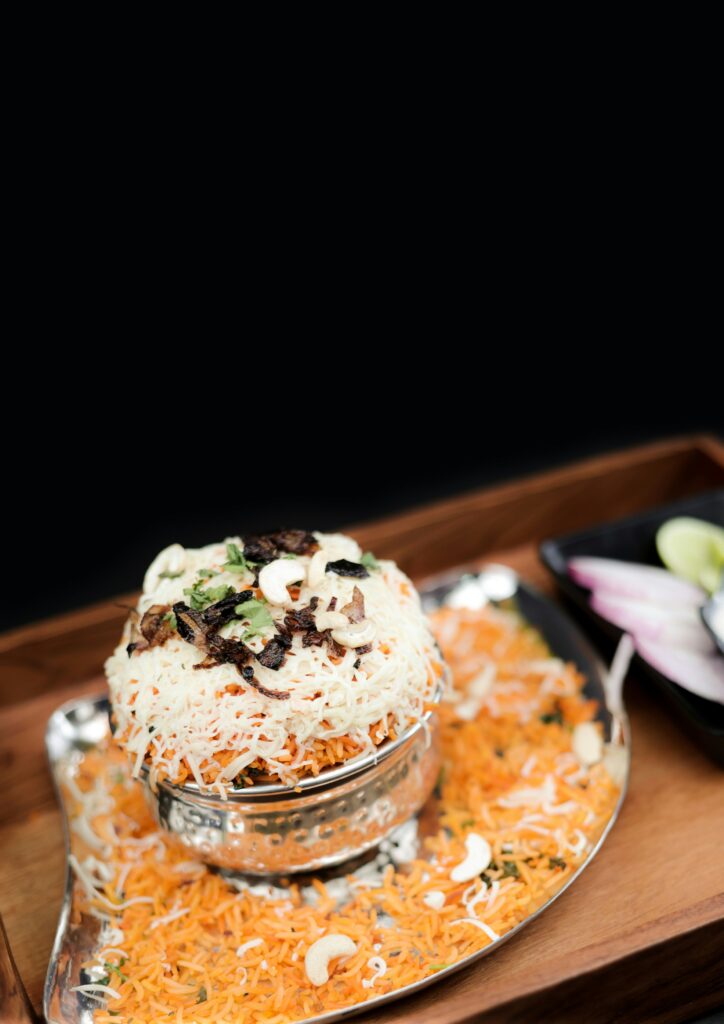
Introduction to Biryani
Biryani is a culinary masterpiece hailing from the Indian subcontinent, known for its rich flavors, fragrant spices, and aromatic rice. Its origins trace back to Persian influences, where it was initially known as “birinj”. The dish traveled across regions through various historical conquests and cultural exchanges, evolving into numerous regional variations. Each type of biryani carries distinct characteristics that reflect local ingredients, cooking methods, and traditions.
Cultural significance plays a vital role in the popularity of biryani. It is much more than just a meal; biryani often symbolizes celebration and togetherness. Served during festivals, weddings, and family gatherings, this dish is a centerpiece that invites sharing and enjoyment among loved ones. The diversity of biryani types, such as Hyderabadi, Lucknowi (Awadhi), and Kolkata biryani, showcases how culture and geography shape this beloved dish.
What sets restaurant-style biryani apart is not merely its taste but also the meticulous preparation that involves marinating the meat, carefully layering the rice, and cooking it to perfection in a sealed pot, a technique referred to as “dum cooking”. This process allows the flavors to meld beautifully, resulting in a fragrant and flavorful dish that satisfies the palate. The use of high-quality spices and ingredients often found in restaurant biryani adds to its uniqueness, making it a cherished favorite among diners.
Thus, biryani remains a culinary symbol of rich heritage, showcasing the blend of history, culture, and flavors in a single dish. The reverence for biryani continues to grow, making it a staple in many homes and restaurants, each striving to replicate the magical taste that defines restaurant-style biryani.
Ingredients Needed
Creating restaurant-style biryani at home requires carefully selected ingredients to achieve authentic flavors. The foundation of any biryani is the rice. Basmati rice is the preferred choice for its long grains and fragrant aroma. Ideally, select high-quality, aged basmati rice which offers better texture and a pleasing aroma after cooking.
Next, you must choose a suitable meat option. The classic biryani recipes generally use chicken, lamb, or beef. Opt for fresh meat from a reputable source to ensure quality; the meat should be tender with a moderate amount of fat for rich flavor. Additionally, vegetarian biryani can be just as delightful, featuring vegetables like potatoes, peas, or paneer as the main protein source.
Spices play a crucial role in biryani, imparting both flavor and aroma. A typical biryani spice blend includes cardamom pods, cloves, cinnamon sticks, and bay leaves, alongside ground spices like cumin, coriander, and turmeric. Fresh herbs such as mint and cilantro (coriander leaves) contribute a fragrant lift and bright color, making them essential garnishes. Including saffron strands can elevate your biryani; soaked in warm milk, saffron adds not only a golden hue but also a unique flavor profile.
Garnishes, such as fried onions and boiled eggs, can further enhance the visual appeal and taste of your biryani. Consider using nuts like almonds or cashews for added crunch and richness. For a touch of heat, green chilies can be included based on personal preference.
When assembling your ingredients, prioritize freshness and quality. This selection not only improves your dish’s authenticity but also its overall appeal. By carefully sourcing your ingredients and incorporating these suggestions, you can successfully recreate a restaurant-style biryani in the comfort of your own kitchen.
Preparation of Rice
Preparing the rice properly is crucial for creating a restaurant-style biryani at home. The process begins with selecting a high-quality basmati rice, which is key to achieving that long, fluffy grain that biryani is renowned for. The first step in rice preparation is soaking; it is advisable to soak the rice for at least 30 minutes before cooking. This soaking process helps in elongating the grains during the cooking phase, ensuring they do not break apart easily.
After soaking, the next step is parboiling the rice. To do this, bring a large pot of water to a rolling boil and add the soaked rice along with a pinch of salt and a few whole spices such as cardamom, cloves, and a bay leaf. The rice should be cooked until it is about 70% done, meaning it should still have a bite to it. Typically, this takes about 5-7 minutes. It is important to keep an eye on the rice during this process—overcooking can lead to mushy grains, which is not desirable in a biryani.
Once the rice reaches the desired stage, it should be drained and rinsed with cold water. This helps to remove excess starch and ultimately prevents the grains from sticking together. After rinsing, place the rice onto a tray to cool down, allowing it to breathe and further develop its texture. To enhance the aroma of the biryani, consider tossing the rice lightly with ghee or a hint of saffron-infused water just before layering it with the meat mixture.
In summary, the proper preparation of rice—through soaking, careful parboiling, and seasoning—significantly contributes to the overall success of your biryani. Paying attention to these details will elevate your dish to a restaurant-quality standard, resulting in a fragrant and visually appealing meal.
Marinating the Meat
Marinating the meat is a crucial step in achieving the rich, layered flavors characteristic of restaurant-style biryani. The process begins by selecting the appropriate cut of meat, typically chicken, lamb, or beef. This meat should be fresh and of high quality to ensure the best results. Before marinating, cut the meat into bite-sized pieces; this allows the marinade to penetrate more deeply.
The marinade generally consists of a combination of yogurt and an array of spices that infuse the meat with robust flavor. Common spices include cumin, coriander, cardamom, cloves, and garam masala, each contributing its unique taste. Additionally, turmeric and red chili powder not only add color but also enhance the flavor profile. One could also incorporate ginger-garlic paste, which is quintessential in Indian cooking, to further heighten the taste.
In a mixing bowl, combine the yogurt with the dry spices, ensuring that the mixture is well-blended. Then, add the meat pieces, ensuring they are thoroughly coated with the marinade. Cover this mixture and let it rest. For optimal flavor absorption, a marination period of at least 2 hours is recommended; however, marinating overnight enhances the depth of flavor significantly. This allows the enzymes in the yogurt to tenderize the meat while the spices infuse their essence throughout.
It is important to note that marinating not only enhances flavor but also improves the texture of the meat, making it tender during the cooking process. For vegetarian biryani, one can opt for paneer or mixed vegetables marinated in similar spices and yogurt alternatives or oil to retain the authentic tastes. Always ensure to marinate in the refrigerator to prevent bacterial growth while also maximizing flavor.
Layering Techniques
Layering is a vital process in preparing biryani, as it significantly influences the final taste, texture, and presentation of the dish. Proper layering ensures that the meat and rice cook evenly while allowing the aromatic spices to intermingle seamlessly. Traditionally, biryani is prepared in a pot with the rice layered on top of the meat, contributing to its unique flavor.
To achieve the desired result, it is essential to start with well-cooked meat and aromatic, partially cooked rice. After marinating the meat with spices and yogurt, it should be cooked until tender yet not completely done. This ensures that the meat maintains its moisture while being layered with the rice. Once the meat is ready, it is customary to begin layering; this often involves adding a base of the cooked meat followed by a layer of rice, and this process typically alternates.
For traditional biryani, it is recommended to incorporate slivers of fried onions, chopped mint, and coriander between the layers. These additions enhance the flavor profile and provide visual appeal. Each layer should be sprinkled lightly with saffron-infused milk, which not only adds color but also a distinctive aroma to the biryani. After layering is complete, it is often beneficial to cover the pot tightly to retain steam, enabling the rice to absorb the flavors from the meat and spices effectively.
Additionally, many chefs advocate the ‘dum’ technique as a means to enhance the final outcome. This method entails sealing the pot and cooking it on low heat, which allows the ingredients to cook together slowly. The steam trapped within the pot ensures that the rice achieves its fluffiness while absorbing the rich flavors from the meat, resulting in an authentic restaurant-style biryani experience in the comfort of one’s home.
Cooking Methods
Biryani is a beloved dish known for its rich flavors and aromatic spices, and it can be prepared using several methods, each with its unique advantages and disadvantages. The three main methods for cooking restaurant-style biryani include dum cooking, stovetop, and oven baking.
Dum Cooking: This traditional method involves sealing the pot with a lid and allowing the biryani to cook in its own steam. It ensures that the flavors meld beautifully, resulting in a flavorful and moist dish. The major advantage of dum cooking is that it allows the spices to develop fully and the rice to absorb the flavors thoroughly. However, this method can take longer and requires careful monitoring of heat to avoid burning.
Stovetop: Cooking biryani on the stovetop is relatively quick and convenient. This method involves layering partially cooked rice with marinated meat or vegetables and then cooking them together. It is a faster approach that can yield satisfactory results. However, without careful stirring and timing, the rice can become mushy or unevenly cooked.
Oven Baking: Baking biryani in the oven is an excellent method for ensuring even heat distribution. The biryani is assembled in an oven-safe dish and covered with foil. This method results in an evenly cooked biryani with a fluffy texture. While oven cooking allows for a hands-off approach, it requires an additional step of preheating and may not impart the same depth of flavor as dum cooking.
Among these methods, dum cooking is often regarded as the most authentic way to achieve restaurant-style biryani. Here is a step-by-step guide to making biryani using the dum cooking method:
- Start by marinating your choice of meat (chicken, lamb, or vegetables) with yogurt and spices for several hours.
- Parboil the basmati rice separately, ensuring it is 70% cooked.
- In a heavy-bottom pot, layer the marinated meat at the bottom, followed by the parboiled rice.
- Add fried onions, mint, and coriander layers between the meat and rice for added flavor.
- Seal the pot with dough to trap steam, then cook on low heat for about 40 minutes.
- After cooking, let it rest for 10 minutes before carefully fluffing the biryani to serve.
Garnishing & Serving Suggestions
When it comes to garnishing and serving biryani, the presentation plays a crucial role in enhancing the dining experience. Traditional biryani is often adorned with crispy fried onions, which add a delightful crunch and a burst of flavor. To achieve this, onions should be sliced thinly and fried until golden brown in ghee or oil. This not only contributes to the aroma but also elevates the visual appeal of the dish.
In addition to fried onions, fresh herbs such as mint and coriander leaves provide a refreshing finish. These herbs not only enhance the dish’s flavor profile but also bring a natural vibrancy to the plate. Placing a handful of these herbs on top of the biryani before serving can dramatically elevate the overall presentation.
For a touch of luxury, consider adding saffron strands soaked in warm milk as a final layer of garnishing. This not only adds a beautiful golden hue but also infuses the dish with a subtle aromatic quality. Chopped nuts, like cashews and almonds, can also serve as excellent toppings, introducing a mild crunch and rich flavor to the dish.
When serving biryani, it is customary to offer complementary side dishes. A refreshing raita made with yogurt, cucumber, and spices can balance the heat of the biryani while adding moisture. Another traditional accompaniment is salad that often includes onion, tomato, and cucumber drizzled with lemon juice, adding freshness to the meal.
For beverages, mint lemonade or a traditional lassi can be excellent choices, providing a cooling effect that pairs harmoniously with the spices in the biryani. Regardless of the garnishing and side choices, the key is to create a vibrant plate that entices both the eyes and taste buds.
Common Mistakes to Avoid
When attempting to recreate restaurant-style biryani at home, several common mistakes can hinder your success. Identifying and addressing these pitfalls can elevate your dish and ensure an authentic experience. One frequent error is the use of poor-quality rice. Basmati rice, known for its long grains and aromatic qualities, should be the first choice for biryani. Opting for inferior rice can lead to a dish with clumpy grains, compromising both texture and flavor.
Another common mistake is the improperly timed cooking of the meat. Many home cooks often underestimate the importance of marination and cooking time. The meat should be marinated for a suitable duration to ensure it absorbs the spices fully. Skipping this step or not allowing sufficient marination time leads to bland meat. It is essential to cook the meat until it is tender, but not to the point where it disintegrates.
The layering of rice and meat plays a crucial role in achieving the perfect biryani. Often, cooks mix these components together rather than layering them appropriately. To create the ideal biryani, traditional practice suggests layering partially cooked rice atop spiced meat, allowing for the absorption of flavors as it finishes cooking. Additionally, avoiding excessive water is vital. Too much moisture can result in soggy rice, while too little can lead to undercooked grains. A balanced water-to-rice ratio is essential—typically, 1 cup of rice requires around 1.5 to 2 cups of water, depending on the rice type.
Time management during the cooking process is another critical aspect that requires attention. Being patient and allowing each component to cook to perfection significantly enhances the overall flavor and texture of the biryani. Following these guidelines can help avoid common mistakes and lead to a successful, restaurant-quality biryani at home.
Conclusion and Variations
As we conclude this exploration of how to make restaurant-style biryani at home, it is worthwhile to consider the immense satisfaction that comes from preparing this beloved dish in your own kitchen. Not only does making biryani allow you to embrace the culinary techniques that bring out its rich flavors, but it also permits personalization tailored to your dietary preferences.
For those who may prefer vegetarian options, a vegetable biryani can be a delightful alternative. By substituting the meat with an array of seasonal vegetables—such as carrots, peas, and bell peppers—and incorporating plant-based protein such as paneer or tofu, you can create a hearty dish that is just as flavorful. Additionally, spices such as garam masala and saffron remain key components in achieving that signature taste.
Furthermore, recognize the regional variations of biryani that exist across India and beyond. For example, Hyderabadi biryani, known for its aromatic layers of rice and marinated meat cooked together, differs significantly from the Kolkata version, which is more subtly spiced and often features boiled eggs. Exploring these variations can not only enhance your biryani-making skills but also introduce you to the diverse culinary heritage associated with this dish.
We encourage you to take the plunge and experiment with different ingredients and preparation methods that resonate with your palate. Embracing your creativity in the kitchen might lead you to discover new flavors and combinations, making your biryani experience not just delicious, but also uniquely yours. Happy cooking!