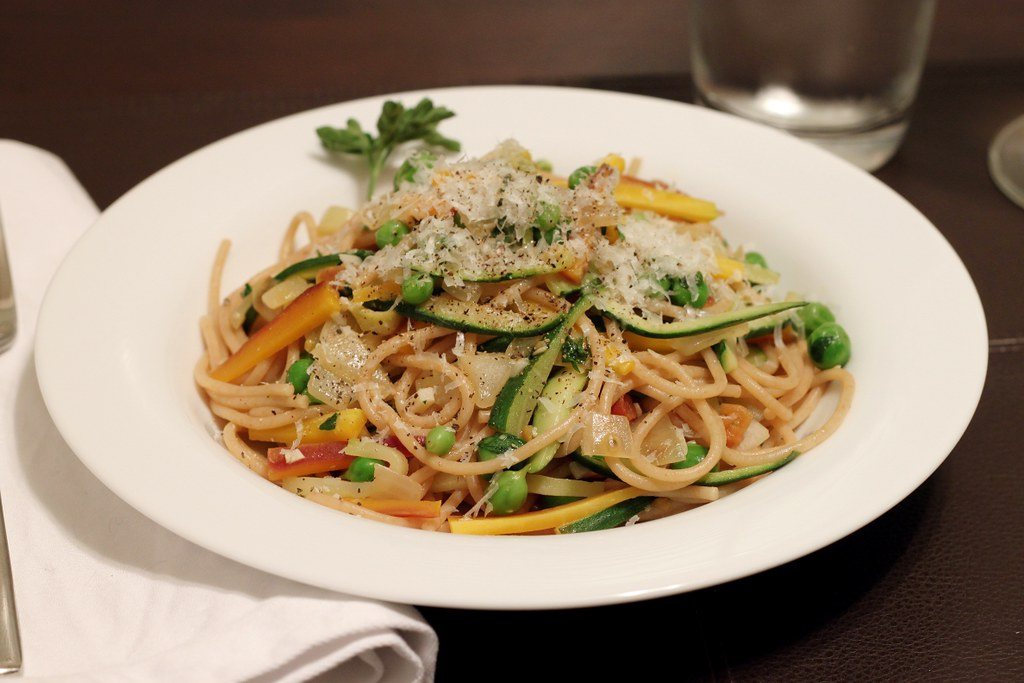
This pasta primavera recipe is what you make when the vegetable drawer is full and you want dinner to feel fresh rather than heavy. Instead of drowning everything in a thick cream sauce, the vegetables are cooked quickly so they keep their colour and crunch, then tossed with pasta, garlic, lemon zest and Parmesan, loosened with a little starchy cooking water.
The result is light but satisfying, colourful enough for guests, and flexible enough to use whatever is in season. Two pans, about thirty minutes, and a bowl of pasta that tastes of vegetables rather than just sauce.
What Makes This Version Special
Primavera means spring in Italian, and the dish is meant to celebrate tender young vegetables. Many versions overcook them into a soft, grey tangle. Here, the firmer vegetables blanch alongside the pasta in the same pot, saving time and washing up, while the softer ones get a quick, hot sauté for a touch of browning. Each vegetable ends up perfectly cooked, and the sauce is built from butter, olive oil, cheese and pasta water, which clings to every piece without being greasy.
- Ready in around 30 minutes
- Vegetarian and easy to make vegan
- Works with almost any seasonal vegetable
- Light enough for summer, filling enough for a main meal
Choosing Your Ingredients
- Pasta: Short shapes like penne and farfalle catch little bits of vegetable; long linguine feels more elegant. Whole wheat pasta adds a nutty flavour and extra fibre.
- Hard vegetables: Broccoli, carrots, green beans and asparagus need a few minutes in boiling water. Cut them small and evenly so they cook at the same rate.
- Soft vegetables: Courgette, peppers, mushrooms and cherry tomatoes do best in the frying pan where they can colour slightly.
- Peas: Frozen peas are excellent here, often sweeter than fresh ones from the market.
- Lemon: Zest goes in for fragrance, juice goes in at the end for brightness. Do not skip it; it lifts the whole dish.
- Parmesan: Grate it finely so it melts into the sauce. For a vegetarian dish, choose a hard cheese made without animal rennet, or use nutritional yeast for a vegan version.
Pasta Primavera Recipe: Bright Spring Vegetables in 30 Minutes
Italian-American · Main Course · Easy
Ingredients
- 350 g penne, farfalle or linguine
- 3 tbsp olive oil
- 1 tbsp butter
- 1 small red onion, thinly sliced
- 4 garlic cloves, thinly sliced
- 1 medium carrot, cut into thin matchsticks
- 150 g broccoli florets, cut small
- 1 red or yellow bell pepper, sliced
- 1 medium courgette (zucchini), halved and sliced
- 100 g frozen peas
- 150 g cherry tomatoes, halved
- Zest of 1 lemon and 1–2 tbsp lemon juice
- 50 g Parmesan, finely grated, plus extra to serve
- 1/4 tsp chilli flakes (optional)
- Small handful of fresh basil or parsley, chopped
- Salt and black pepper, to taste
Method
- Bring a large pot of well-salted water to the boil. Cook the pasta until al dente according to the packet, adding the broccoli and carrot for the last 3 minutes and the peas for the last 1 minute.
- Before draining, scoop out 250 ml (1 cup) of the pasta water. Drain the pasta and vegetables.
- Meanwhile, heat the olive oil and butter in a large frying pan over medium-high heat. Cook the onion for 3 minutes until just softened.
- Add the bell pepper and courgette with a pinch of salt and cook for 4–5 minutes until lightly browned but still crisp.
- Add the garlic and chilli flakes and cook for 1 minute, then add the cherry tomatoes and cook for 2 minutes until they just start to soften.
- Tip in the drained pasta and vegetables, the lemon zest, Parmesan and a splash of pasta water. Toss over the heat for 1–2 minutes until glossy, adding more water as needed.
- Finish with lemon juice, fresh herbs, salt and pepper. Serve immediately with extra Parmesan.
How to Make It, Stage by Stage
Salt the water properly
Pasta water should taste pleasantly salty, roughly one tablespoon of salt for every four litres. This seasons both the pasta and the blanched vegetables from the inside, and the salty, starchy water later becomes part of the sauce.
Time the vegetables with the pasta
Check how long your pasta needs and work backwards. Broccoli and carrot sticks go in three minutes before the end, peas in the last minute. Everything drains together, and the vegetables are bright and just tender. If you are using asparagus or green beans, treat them like the broccoli.
Sauté on high heat
While the pasta boils, get your frying pan properly hot. Spread the peppers and courgette out so they sear rather than stew. A crowded pan releases water and you lose that lovely light browning. Add the garlic only once the vegetables have colour, since sliced garlic burns quickly and turns bitter.
Bring it together
Add the drained pasta to the frying pan along with the Parmesan and a good splash of pasta water. Toss energetically for a minute or two. The starch, fat and cheese come together into a light, glossy coating. If it looks dry, add more water; if it looks soupy, keep tossing over the heat for a few seconds longer.
Tips for Better Primavera
- Prepare all the vegetables before you start cooking. Once things move, they move quickly.
- Keep vegetable pieces roughly bite-sized so every forkful gets a mix.
- Reserve more pasta water than you think you need. It is the key to a silky sauce.
- Add the lemon juice off the heat so it stays fresh and sharp.
- Taste before serving. Parmesan and pasta water are both salty, so season at the end.
Ways to Change It Up
Creamy primavera: Stir in 120 ml of cooking cream or a couple of spoonfuls of cream cheese with the pasta for a richer, restaurant-style finish.
Add protein: Sliced grilled chicken breast, sautéed prawns, or a tin of drained chickpeas all turn this into a heartier meal. Cook chicken until it reaches 74°C (165°F) inside.
Desi-style: Add a pinch of crushed red chilli, half a teaspoon of chaat masala and some chopped green chilli with the garlic, then finish with fresh coriander instead of basil.
Vegan: Skip the butter and cheese, use extra olive oil, and finish with toasted breadcrumbs and nutritional yeast.
Serving and Storing
Serve this pasta primavera recipe in warm bowls straight from the pan, with extra Parmesan and black pepper at the table. A simple side salad, some garlic toast, or a bowl of tomato soup makes it a full meal. It also works as a side dish next to grilled fish or chicken.
Leftovers keep in an airtight container in the fridge for up to three days. The pasta absorbs the sauce as it sits, so add a splash of water or stock when reheating in a pan over medium heat, or microwave covered until hot. It is also surprisingly good cold as a pasta salad with an extra squeeze of lemon and a drizzle of olive oil. Freezing is not recommended, as the vegetables become soft and watery.
Frequently Asked Questions
Which vegetables are best for this pasta primavera recipe?
Classic choices are broccoli, peas, carrots, courgette, peppers, asparagus and cherry tomatoes. Aim for a mix of colours and textures. Mushrooms, spinach, green beans and sweetcorn also work well.
Can I use frozen mixed vegetables?
Yes. Add a bag of frozen mixed vegetables to the pasta water for the final two minutes, drain, then toss everything in the pan with the garlic. Fresh peppers and tomatoes still add a nice freshness if you have them.
How do I stop the pasta from being dry?
Use the reserved pasta water. Add it gradually while tossing until the pasta looks glossy. Serve immediately, because the pasta keeps absorbing liquid as it stands.
Is pasta primavera healthy?
It is a good way to eat plenty of vegetables, and this version uses only modest amounts of butter and cheese. For a lighter meal, increase the vegetables and reduce the pasta a little.
Enjoy Your Primavera
Keep this pasta primavera recipe as a template rather than a strict rule. Change the vegetables with the seasons, swap the herbs, add a protein when you need something heartier, and you will have a dependable, colourful dinner that never feels repetitive.