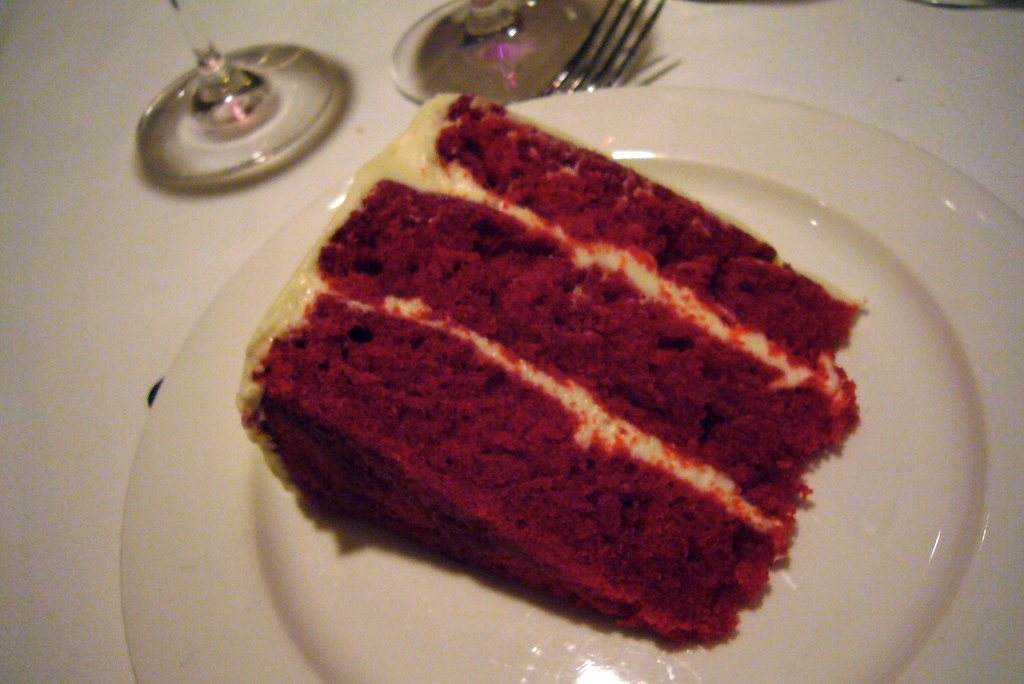
This red velvet cake recipe is the one to bake when you want a cake that looks dramatic but tastes gentle and comforting. The crumb is soft and fine, with a light cocoa note, a slight tang from buttermilk and that unmistakable deep red colour. Cream cheese frosting finishes it with just enough sharpness to balance the sweetness.
What makes this version reliable is oil instead of butter in the sponge. Oil keeps the layers moist for days, even in the fridge, and the batter comes together in two bowls with a whisk. No mixer is needed for the cake itself, and the frosting is thick enough to pipe or spread neatly.
Why You’ll Love This Recipe
- Moist for days: the oil-based sponge stays tender long after baking.
- Balanced flavour: a little cocoa, a little tang and a mild vanilla finish, never cloying.
- Stable frosting: cold cream cheese and a good amount of icing sugar give a frosting that holds layers neatly.
- Celebration-ready: two layers, striking colour and very little decorating skill required.
It is a natural choice for birthdays, Eid gatherings, Valentine’s Day and anniversaries, and it slices beautifully for a crowd.
Key Ingredients and Smart Substitutions
- Buttermilk: gives tang and tenderness and reacts with the bicarbonate of soda for lift. If you cannot find it, stir 1 tablespoon of lemon juice or vinegar into 240 ml of whole milk and leave for 10 minutes. Thinned plain yoghurt (dahi) works too.
- Cocoa powder: only a small amount is used, so the cake tastes lightly chocolatey rather than like a chocolate cake. Natural cocoa gives a brighter red; Dutch-processed cocoa makes the colour a little darker.
- Food colouring: gel colouring is concentrated and gives a strong red without thinning the batter. Liquid colouring works but you will need more. Beetroot powder is a natural option, though the colour turns more maroon-brown after baking.
- Vinegar: a teaspoon adds extra acidity for a lighter crumb. You will not taste it.
- Oil: sunflower, canola or any neutral oil. Avoid strongly flavoured oils such as mustard or extra virgin olive oil.
- Hot water or coffee: loosens the batter and blooms the cocoa. Coffee deepens the flavour without making it taste of coffee.
- Cream cheese: use full-fat block cream cheese. Spreadable tub versions contain more water and make a runny frosting.
Red Velvet Cake Recipe: Soft Layers with Cream Cheese Frosting
American · Dessert · Medium
Ingredients
- 300 g plain flour (2 1/2 cups)
- 20 g unsweetened cocoa powder (3 tbsp)
- 1 tsp bicarbonate of soda (baking soda)
- 1/2 tsp fine salt
- 300 g caster sugar (1 1/2 cups)
- 240 ml neutral oil (1 cup)
- 2 large eggs, at room temperature
- 240 ml buttermilk, at room temperature (1 cup)
- 1 tbsp red gel food colouring (or 2 tbsp liquid colouring)
- 2 tsp vanilla extract
- 1 tsp white vinegar
- 120 ml hot water or hot coffee (1/2 cup)
- For the frosting: 340 g full-fat cream cheese, cold
- For the frosting: 115 g unsalted butter, softened (1/2 cup)
- For the frosting: 400 g icing sugar, sifted (about 3 1/4 cups)
- For the frosting: 1 tsp vanilla extract and a pinch of salt
Method
- Heat the oven to 175°C (160°C fan) / 350°F. Grease two 20 cm (8 inch) round tins and line the bases with baking paper.
- Whisk the flour, cocoa, bicarbonate of soda and salt together in a bowl.
- In a large bowl, whisk the sugar and oil, then beat in the eggs one at a time until glossy.
- Stir the food colouring, vanilla and vinegar into the buttermilk, then whisk it into the oil mixture.
- Fold in the dry ingredients in two additions until just combined, then stir in the hot water or coffee to make a thin batter.
- Divide between the tins and bake for 28 to 32 minutes, until a skewer comes out with a few moist crumbs.
- Cool in the tins for 10 minutes, then turn out onto a rack and cool completely.
- For the frosting, beat the butter until creamy, add the cold cream cheese and beat briefly, then beat in the icing sugar, vanilla and salt until smooth.
- Level the cakes if needed, sandwich with frosting, coat the top and sides, and chill for 30 minutes before slicing.
Step-by-Step Guide
Preparing the Tins and Oven
Line the tin bases with baking paper even if they are non-stick. Red velvet is tender and can tear when turned out. Let the oven heat fully for at least 15 minutes, because an oven that is still warming up gives uneven rise and domed tops.
Making the Batter
Whisk the sugar and oil first, then add the eggs one by one. You want the mixture slightly thickened and glossy. Mix the colouring into the buttermilk rather than straight into the batter; this spreads the colour evenly so you do not get streaks. When you add the flour mixture, fold only until you can no longer see dry patches. Overmixing develops gluten and gives a tougher, tunnelled crumb.
The batter will look very thin after the hot water goes in. That is correct, and it is what gives the cake its soft, velvety texture.
Baking and Cooling
Bake on the middle shelf and resist opening the door during the first 20 minutes. The cakes are done when the tops spring back and a skewer shows a few moist crumbs, not wet batter. Cool them completely before frosting. Even slightly warm layers will melt cream cheese frosting and make the cake slide.
Frosting and Assembly
Beat the butter alone first until smooth, then add the cream cheese straight from the fridge and mix only briefly. Long beating warms and thins cream cheese. Add the icing sugar gradually on low speed. If you want a clean finish, spread a thin crumb coat, chill for 20 minutes, then add the final layer of frosting.
Tips for the Best Results
- Bring the eggs and buttermilk to room temperature so the batter emulsifies smoothly.
- Weigh the flour if you can. Too much flour is the most common reason for a dry red velvet cake.
- Trim the domed tops with a serrated knife and crumble the offcuts to decorate the sides.
- If your kitchen is hot, chill the frosting for 15 minutes before using it.
- Wipe the knife between slices for neat, bakery-style pieces.
Variations to Try
Red velvet cupcakes: this red velvet cake recipe makes around 24 cupcakes. Fill liners two-thirds full and bake for 18 to 20 minutes.
Sheet cake: bake the batter in a 23 x 33 cm (9 x 13 inch) tin for 30 to 35 minutes and frost only the top for an easy party tray.
Three thin layers: divide between three tins and reduce baking time to about 20 to 24 minutes for a taller, more elegant cake.
Egg-free version: replace the eggs with 120 g of plain yoghurt and add 1/2 teaspoon of baking powder to the dry ingredients. The crumb is slightly denser but still soft.
Serving, Storage and Make-Ahead
Serve slices slightly cool rather than ice-cold so the sponge feels soft and the frosting creamy. Let the cake sit out for 20 to 30 minutes after chilling. Fresh strawberries or raspberries make a pretty garnish, and a cup of strong tea or black coffee cuts through the richness nicely.
Because the frosting contains cream cheese, keep the finished cake covered in the fridge for up to 4 days. Unfrosted layers can be wrapped tightly in cling film and frozen for up to 2 months; thaw them in the wrapping so they stay moist. Frosted slices can also be frozen on a tray, then wrapped individually. No reheating is needed, just bring slices back towards room temperature before serving.
Frequently Asked Questions
Why is my red velvet cake brown instead of red?
Not enough colouring, Dutch-processed cocoa or a weak liquid colouring are the usual causes. Gel colouring and natural cocoa give the brightest result.
Can I make this red velvet cake recipe without buttermilk?
Yes. Use milk soured with lemon juice or vinegar, or thinned plain yoghurt. The acidity matters for both flavour and rise.
Can I use butter instead of oil?
You can use melted butter, which adds flavour, but the cake firms up more in the fridge and tastes drier the next day.
Why is my cream cheese frosting runny?
It was probably overbeaten, made with tub cream cheese or made in a warm kitchen. Chill it for 30 minutes and beat in a little more icing sugar if needed.
How far ahead can I bake it?
Bake the layers a day ahead, wrap them and keep them at room temperature, then frost on the day. A fully frosted cake keeps well in the fridge overnight.
Final Thoughts
Once you have baked this red velvet cake recipe a couple of times, it becomes an easy favourite: whisk, bake, cool and frost. The soft red layers and tangy frosting always draw attention on the table, and the cake tastes just as good on day two.