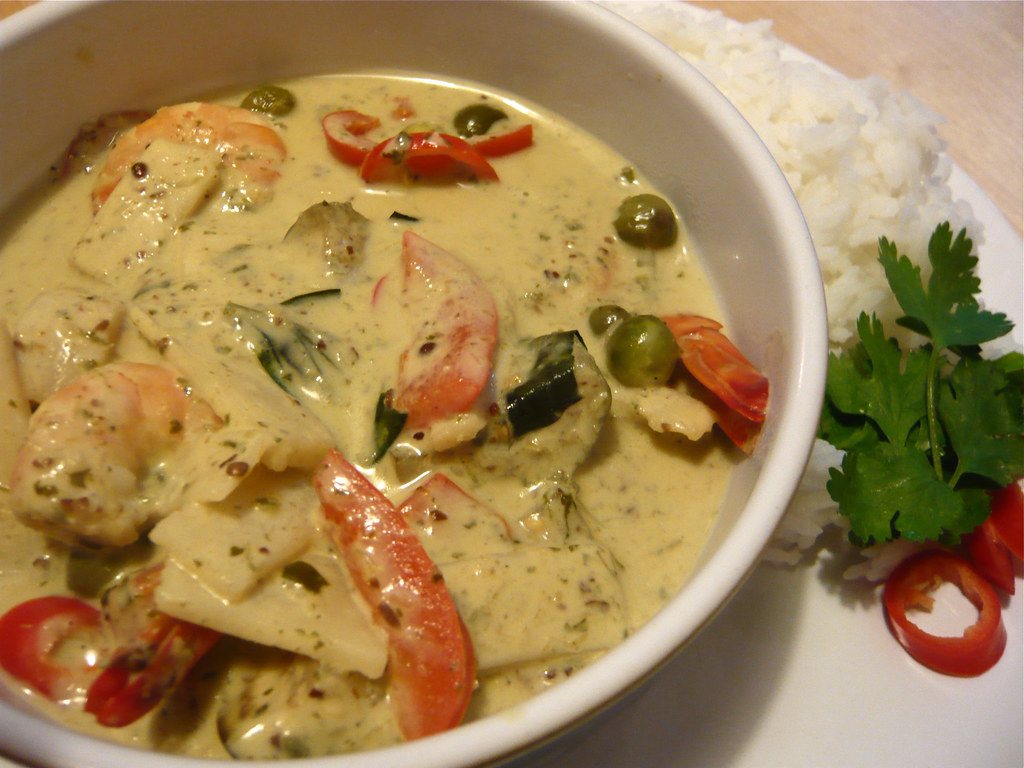
A good Thai green curry recipe should taste bright, creamy and fragrant all at once, with a sauce that is spicy enough to wake you up but soft enough to spoon over rice. This version gets there by frying the paste in thick coconut cream first, which unlocks far more aroma than simply stirring paste into liquid.
Chicken thighs stay juicy, the vegetables keep a little bite, and a final handful of basil and squeeze of lime lift the whole pot. It is quick enough for a Tuesday night and good enough to serve to guests.
Why This Version Works
Every step in this Thai green curry recipe has a purpose.
- Cracking the coconut cream: simmering the thick top layer of coconut milk until the oil separates gives the paste a hot, fatty base to fry in, which is the traditional Thai method.
- Thigh meat: it tolerates simmering without turning dry or stringy the way breast often does.
- Balanced seasoning: fish sauce, palm sugar and lime are added in stages so you can taste and correct as you go.
- Flexible vegetables: use what you have, as long as you add them according to how long they take to cook.
The Ingredients That Matter
Most of the flavour comes from a handful of items, so it pays to choose them well.
- Green curry paste: shop-bought paste is perfectly fine. Thai brands such as those sold in small tins or tubs are usually spicier and more aromatic than supermarket jars, so start with 3 tablespoons and add more if needed.
- Coconut milk: choose full-fat and avoid shaking the can, because you want to scoop the thick cream off the top. Light coconut milk will not separate and gives a thinner sauce.
- Fish sauce: this provides the salty, savoury depth. If you cannot use it, swap in light soy sauce with a pinch of salt.
- Palm sugar: it rounds off the heat. Light brown sugar is a good substitute.
- Kaffir lime leaves: fresh or frozen leaves give a distinctive citrus perfume. Lime zest is the best stand-in if you cannot find them.
- Thai basil: it has an anise note that is classic here. Regular sweet basil still works well.
Thai Green Curry Recipe with Chicken: Fragrant and Ready in 35 Min
Thai · Main Course · Easy
Ingredients
- 600 g boneless chicken thighs, sliced into bite-size strips
- 2 x 400 ml cans full-fat coconut milk (do not shake)
- 3-4 tbsp Thai green curry paste
- 1 tbsp vegetable oil
- 2 tbsp fish sauce, plus more to taste
- 1 tbsp palm sugar or light brown sugar
- 4 kaffir lime leaves, torn (or zest of 1 lime)
- 1 stalk lemongrass, bruised (optional)
- 150 g green beans, cut into 4 cm pieces
- 1 small red pepper, sliced
- 1 small courgette or 6 Thai eggplants, cut into chunks
- 100 g bamboo shoots, drained (optional)
- 1 large handful Thai basil or regular basil leaves
- 1 red chilli, sliced, to garnish
- Juice of 1/2 lime
- Steamed jasmine rice, to serve
Method
- Spoon the thick cream from the top of one can of coconut milk into a wok or wide pan with the oil. Simmer over medium-high heat for 3-4 minutes, stirring, until it bubbles and the oil starts to separate.
- Add the curry paste and fry in the coconut cream for 2 minutes, stirring constantly, until very fragrant.
- Add the chicken and stir to coat in the paste. Cook for 3 minutes until the outside of the chicken turns opaque.
- Pour in the rest of the coconut milk, then add the fish sauce, sugar, lime leaves and lemongrass. Bring to a gentle simmer.
- Add the green beans, courgette or eggplant and bamboo shoots. Simmer for 6-8 minutes until the vegetables are just tender and the chicken is cooked through to 74°C (165°F).
- Add the red pepper and cook for 1 minute more so it stays crisp.
- Turn off the heat, stir in the basil and lime juice, then taste and adjust with more fish sauce for salt or sugar for balance.
- Remove the lemongrass, garnish with sliced chilli and serve hot over jasmine rice.
Cooking It Step by Step
Stage 1: Fry the paste
Spoon the solid cream from one can into a wok over medium-high heat. Let it bubble, stirring, until it looks slightly split and you can see small pools of clear oil. This takes three or four minutes. Add the paste and keep it moving for about two minutes. Your kitchen should smell strongly of lemongrass, galangal and chilli. If the paste starts to catch, add a spoonful of the thinner coconut milk.
Stage 2: Seal the chicken
Tip in the sliced chicken and stir so every piece is coated in paste. You are not trying to brown it, just to cook the surface and let it absorb the flavour. Three minutes is enough.
Stage 3: Simmer and season
Pour in the remaining coconut milk and add the fish sauce, sugar, torn lime leaves and bruised lemongrass. Keep the heat at a gentle simmer rather than a hard boil, which can make coconut milk grainy. Add the firmer vegetables now: green beans, courgette or eggplant and bamboo shoots.
Stage 4: Finish and balance
After six to eight minutes the chicken should reach 74°C (165°F) in the thickest piece. Add the red pepper for a final minute, then take the pan off the heat. Stir in the basil and lime juice and taste. The sauce should be salty, slightly sweet, gently sour and hot. Adjust one element at a time until it feels balanced.
Tips for a Restaurant-Quality Curry
- Slice the chicken thinly and evenly so it cooks quickly and at the same rate.
- Add the basil off the heat; it turns black and loses its fragrance if boiled.
- If the sauce tastes flat, it usually needs more fish sauce rather than more paste.
- For a thinner, soupier curry in the Thai style, add 100 ml chicken stock with the coconut milk.
- Taste your paste before cooking. Heat varies hugely between brands, so adjust the amount to suit your family.
Variations to Try
This Thai green curry recipe is easy to adapt. For prawns, skip the chicken stage and add raw prawns in the last three minutes so they stay tender. For a vegetarian curry, use firm tofu and soy sauce in place of fish sauce, and check that your paste does not contain shrimp. Beef works too if you slice it very thinly and add it near the end. In autumn, cubes of pumpkin or sweet potato make a lovely, slightly sweeter version; simmer them for about ten minutes before adding the chicken back in. Desi cooks sometimes like to stir in a handful of spinach at the end, which wilts in seconds and adds colour.
Serving, Storage and Reheating
Steamed jasmine rice is the classic partner because its soft, fragrant grains soak up the sauce. Basmati rice works if that is what you have. Rice noodles are another good option for a lighter bowl. Keep sides simple: a crunchy cucumber salad with a little vinegar, sugar and chilli cuts through the richness nicely, and a few prawn crackers add texture. A wedge of lime on each plate lets everyone sharpen their own bowl.
Cool leftovers quickly and keep them in an airtight container in the fridge for up to three days. The flavour often deepens overnight. Reheat gently in a pan over medium-low heat until piping hot all the way through, adding a splash of water or coconut milk if the sauce has thickened. You can freeze the curry for up to two months, although courgette and eggplant soften on thawing. If you plan to freeze it, leave the basil out and add fresh leaves after reheating.
Frequently Asked Questions
Why is my green curry not very green?
Many shop pastes are more olive or khaki than bright green, and that is normal. The colour in restaurants often comes from extra fresh herbs. Blend a handful of basil and coriander with a little coconut milk and stir it in at the end for a greener sauce.
How do I make it less spicy?
Use two tablespoons of paste instead of three or four, and add an extra splash of coconut milk. You cannot easily remove heat once it is in, so start low and build up.
Can I use chicken breast?
Yes. Slice it thinly and add it a little later, simmering only until it reaches 74°C (165°F). Overcooked breast becomes dry quickly.
Is green curry hotter than red curry?
Often, yes. Green paste is traditionally made with fresh green chillies, which tend to give a sharper heat than the dried red chillies used in red paste, though this varies by brand.
Can I make the curry ahead?
You can cook it a few hours ahead and reheat gently. For best texture, undercook the vegetables slightly so they do not turn soft when warmed again.
Final Word
Once you have made this Thai green curry recipe a couple of times, you will find it comes together almost without thinking. Fry the paste properly, balance the seasoning at the end, and you will have a creamy, aromatic curry that easily beats a takeaway. Keep a jar of paste and a few cans of coconut milk in the cupboard and dinner is never far away.