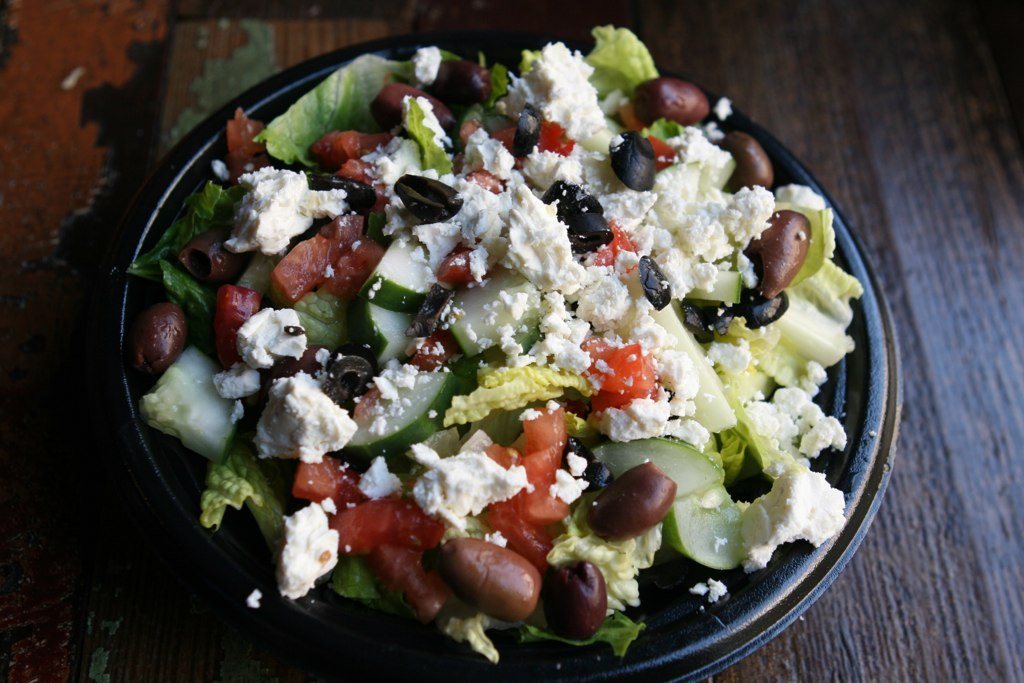
A proper Greek salad is all about simplicity: ripe tomatoes, crisp cucumber, sharp red onion, green pepper, olives and a generous slab of feta, dressed with good olive oil and oregano. This Greek salad recipe follows the classic village-style horiatiki, which means no lettuce at all, just chunky vegetables that soak up a bright, herby dressing.
What makes this version great is attention to the small details. The onion is soaked briefly to tame its bite, the tomatoes are salted so their juices mingle with the oil, and the feta goes on as one proud block rather than crumbled away. It takes fifteen minutes and tastes like a Mediterranean summer.
Why You’ll Love This Salad
It is fresh, colourful and quick, with no cooking at all. It is naturally vegetarian and gluten-free, works as a light lunch or a side to almost any grilled dish, and the juices at the bottom of the bowl are so good you will want bread to mop them up.
It also travels well to picnics and barbecues, because without lettuce there is nothing to wilt.
Choosing the Ingredients
With so few components, quality really shows. Here is what to look for and how to adapt.
- Tomatoes: the ripest, reddest you can find. Vine or beef tomatoes are ideal. Cherry tomatoes work well out of season, halved.
- Cucumber: a regular cucumber, partially peeled in stripes for texture. Remove the seeds if it is very watery.
- Red onion: thinly sliced. Soaking in cold water for ten minutes softens its sharpness.
- Green pepper: traditional, adding a fresh, slightly bitter crunch. Use red or yellow for a sweeter flavour.
- Kalamata olives: rich and fruity. Any good black olive will do.
- Feta cheese: buy feta in brine, preferably made from sheep’s milk or a sheep and goat blend, for a creamy, tangy flavour. A firm white cheese like Bulgarian white cheese is a fair substitute.
- Extra virgin olive oil: the dressing’s star. Use your best.
- Dried oregano: Greek oregano is wonderfully fragrant. Rub it between your fingers to release the oils.
- Red wine vinegar or lemon juice: just a little, for brightness.
- Capers: optional, but common in island versions.
Greek Salad Recipe: Authentic Village-Style with Feta
Greek · Side Dish · Easy
Ingredients
- 4 ripe tomatoes (about 600 g), cut into wedges
- 1 cucumber, partly peeled and cut into thick half-moons
- 1 small red onion, thinly sliced
- 1 green pepper, cut into thin rings
- 80 g (1/2 cup) Kalamata olives
- 1 tbsp capers, optional
- 200 g block feta cheese
- 4 tbsp extra virgin olive oil
- 1 tbsp red wine vinegar or lemon juice
- 1 tsp dried oregano
- 1/2 tsp salt
- 1/4 tsp black pepper
Method
- Soak the sliced onion in cold water for 10 minutes, then drain and pat dry.
- Cut the tomatoes into wedges, the cucumber into thick half-moons and the pepper into rings; place in a wide bowl.
- Add the onion, sprinkle with salt and toss gently; let stand for 5 minutes.
- Scatter over the olives and capers.
- Place the feta on top as a block or thick slabs.
- Drizzle with the vinegar, then generously with olive oil.
- Sprinkle with dried oregano and black pepper and serve immediately with bread.
Putting It Together
Tame the onion
Slice the onion into thin rings or half-moons and place in a bowl of cold water for ten minutes. Drain and pat dry. This simple step keeps the crunch but removes the harsh, lingering bite raw onion can have.
Cut the vegetables chunky
Cut the tomatoes into irregular wedges, the cucumber into thick half-moons, and the pepper into thin rings. Chunky pieces are the hallmark of a village salad, so do not dice too finely. Place everything in a wide, shallow bowl.
Season in layers
Sprinkle the vegetables with a little salt and toss gently. Let them sit for five minutes; the salt draws out tomato juice, which becomes part of the dressing. Scatter over the olives and capers.
Crown with feta and dress
Place the feta block on top, or cut it into a couple of thick slabs. Drizzle the vinegar over the vegetables, then pour the olive oil generously over everything, feta included. Finish with a good pinch of dried oregano and some black pepper. Serve straight away and break the feta at the table.
Tips for the Best Greek Salad
- Never refrigerate tomatoes before using them; cold kills their flavour.
- Season the vegetables, not the feta. Feta is already salty.
- Do not overdress with vinegar. A traditional Greek salad recipe leans on olive oil, with vinegar as a supporting note.
- Toss gently. Rough tossing breaks the tomatoes and makes the salad watery.
- Serve with bread. Dipping it into the juices at the bottom is part of the experience.
One last note on balance: taste a piece of tomato with a little feta and a drop of the juices before serving. If it tastes flat, add a pinch more salt to the vegetables or a few more drops of vinegar. If it tastes sharp, a little extra olive oil will round it out. Ten seconds of tasting makes the difference between a good salad and a memorable one.
Variations and Additions
With lettuce: outside Greece, many versions add crisp romaine. Add it just before serving so it stays crunchy.
Protein boost: top with grilled chicken, chickpeas or tinned tuna to make it a complete meal.
Greek salad wraps: pile the salad into pitta with a spoon of tzatziki or hummus.
Desi twist: add a squeeze of lemon, a pinch of chaat masala and fresh mint. It is not traditional, but it is delicious with kebabs.
Pasta salad: toss with cooked, cooled pasta and a little extra dressing for picnics.
Serving and Storage
Serve alongside grilled chicken, lamb chops, souvlaki, kebabs, grilled fish or a simple bowl of rice. It also makes a fresh counterpoint to rich dishes like biryani or lasagne. For a meze spread, serve with hummus, tzatziki, olives and warm flatbread.
This salad is best eaten fresh. If you need to prepare ahead, chop the cucumber, pepper and onion and keep them in a covered container in the fridge for up to a day. Cut the tomatoes, add the feta and dress just before serving. Leftover dressed salad will keep in the fridge for a day, but the vegetables will soften and release liquid. Use leftovers in a wrap or spoon them over rice.
Frequently Asked Questions
Does authentic Greek salad have lettuce?
The traditional village salad, horiatiki, does not. Lettuce versions are common in restaurants outside Greece.
What dressing goes on a Greek salad?
Mostly extra virgin olive oil with a splash of red wine vinegar, dried oregano, salt and pepper. Some people use lemon juice instead of vinegar.
Can I make this Greek salad recipe ahead of time?
Prep the sturdier vegetables ahead, but cut the tomatoes and dress the salad just before serving for the best texture.
Which feta is best?
Feta sold in brine, made mainly from sheep’s milk, is creamier and more flavourful than vacuum-packed versions.
Is Greek salad healthy?
It is full of fresh vegetables and olive oil. Feta and olives add salt, so go easy on extra seasoning.
Simple and Timeless
This Greek salad recipe is less a recipe and more a celebration of good ingredients treated with respect. Buy ripe tomatoes, quality feta and fragrant olive oil, and this salad will reward you every time.