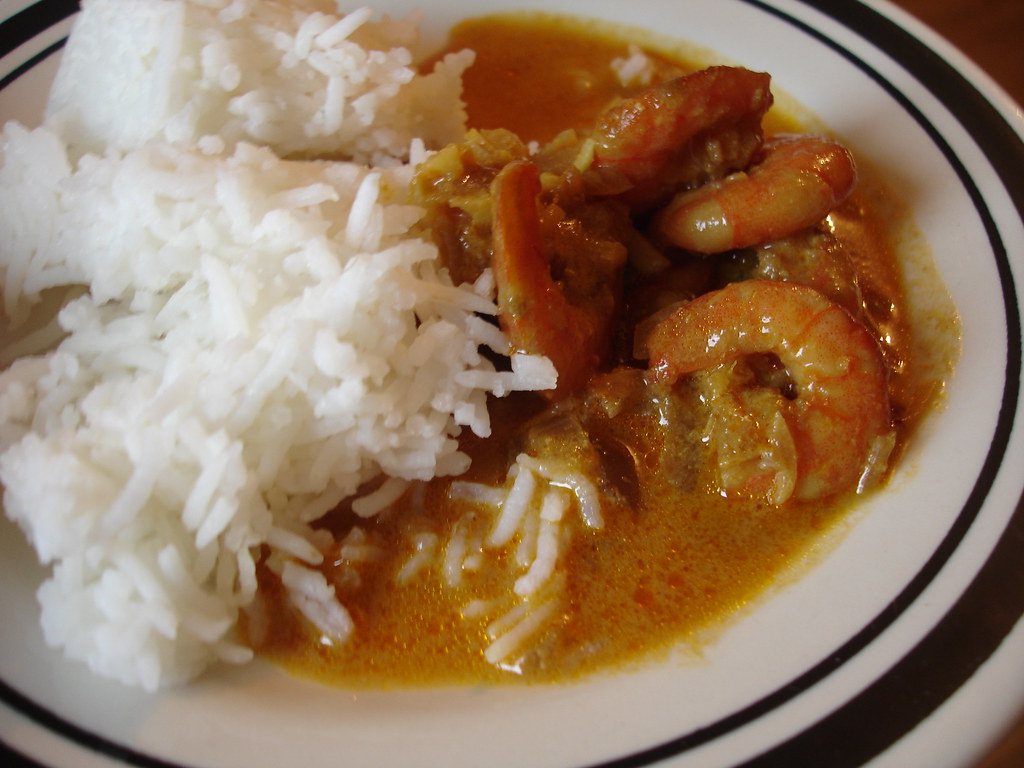
This shrimp masala recipe gives you plump, juicy prawns in a thick, spicy tomato and onion gravy that clings to every bite. It is the kind of curry you can put on the table in about half an hour, which makes it a real weeknight hero, yet it tastes rich enough for guests.
What sets this version apart is the order of work. The prawns are marinated briefly and seared first, then lifted out while the masala is cooked down properly until the oil separates. They go back in only at the very end, so they stay tender instead of turning rubbery. A final handful of fresh coriander and a squeeze of lemon keep it bright.
Why You’ll Love This Prawn Curry
- It is quick. Prawns cook in minutes, so most of the time goes into building the masala.
- The texture is right. Searing and returning the prawns late keeps them sweet and springy.
- It uses pantry spices. Cumin, turmeric, chilli and garam masala are all you need.
- It is flexible. Make it dry and clinging for roti, or loosen it into a saucier curry for rice.
What Makes a Good Masala Base
Any shrimp masala recipe lives or dies by its bhuna, the slow frying of onions, tomatoes and spices until they turn into a glossy paste. Rushing this step leaves a raw, sharp taste. Give the onions time to turn deep golden, and keep stirring the tomatoes until you see little beads of oil appear around the edge of the pan. That is your signal that the masala is cooked.
Shrimp Masala Recipe: Spicy Prawn Curry in 30 Minutes
Pakistani · Main Course · Easy
Ingredients
- 500 g large raw prawns, peeled and deveined
- 1 tbsp lemon juice
- 1/2 tsp turmeric powder
- 1 1/2 tsp red chilli powder, divided
- 1 1/4 tsp salt, divided
- 4 tbsp (60 ml) cooking oil
- 1 tsp cumin seeds
- 2 medium onions, thinly sliced
- 1 tbsp ginger garlic paste
- 1 tsp ground coriander
- 1/2 tsp ground cumin
- 3 medium tomatoes, chopped
- 2 green chillies, slit
- 120 ml (1/2 cup) hot water
- 1/2 tsp garam masala
- 1 tsp kasuri methi (dried fenugreek), optional
- 2 tbsp chopped fresh coriander
Method
- Toss the prawns with lemon juice, turmeric, 1/2 tsp chilli powder and 1/4 tsp salt. Rest for 10–15 minutes.
- Heat 1 tbsp oil in a wide pan over high heat. Sear the prawns about 1 minute per side until just pink, then remove to a plate.
- Add the remaining oil and cumin seeds to the pan. When they sizzle, add the onions and cook 10–12 minutes over medium heat until golden brown.
- Stir in the ginger garlic paste and cook 1 minute. Add remaining chilli powder, coriander, ground cumin and salt with a splash of water and stir for 30 seconds.
- Add the tomatoes and green chillies. Cook, stirring, 8–10 minutes until the mixture is thick and the oil separates.
- Pour in the hot water and simmer for 2 minutes to reach your preferred consistency.
- Return the prawns and their juices. Simmer 2–3 minutes until opaque throughout (63°C / 145°F).
- Sprinkle with garam masala, crushed kasuri methi and fresh coriander. Serve hot with rice or roti.
Key Ingredients and Swaps
- Prawns: Large raw prawns, peeled and deveined, work best. Frozen are fine; thaw them in the fridge overnight or under cold running water, then pat completely dry so they sear rather than steam. Avoid pre-cooked prawns, which toughen when heated again.
- Onions: Two medium onions give body and natural sweetness. Slice them thinly so they brown evenly.
- Tomatoes: Ripe fresh tomatoes are ideal. Out of season, use half a tin of chopped tomatoes and cook it a few minutes longer.
- Ginger and garlic: Freshly crushed paste has the best flavour, though a good jarred paste is a fair shortcut.
- Oil: Any neutral oil works. A spoon of ghee at the end adds a lovely aroma.
- Kasuri methi: Dried fenugreek leaves are optional but give a warm, slightly bitter note that suits seafood.
Step-by-Step Guide
Prepare and marinate
Clean the prawns, removing the dark vein along the back. Toss them with a little salt, turmeric and chilli powder plus a squeeze of lemon. Ten to fifteen minutes is plenty; longer than about thirty minutes and the acid starts to make the flesh mushy.
Sear the prawns
Heat a little oil in a wide pan until hot and lay the prawns in a single layer. Cook for about one minute per side, just until they turn pink at the edges. They should still be slightly translucent in the middle. Remove them to a plate. Crowding the pan will cool it down, so work in two batches if needed.
Build the masala
In the same pan, add the rest of the oil and the cumin seeds. When they sizzle, add the onions and cook them patiently over medium heat for 10 to 12 minutes until golden brown. Stir in the ginger garlic paste for a minute, then the ground spices with a splash of water so they do not scorch. Add the tomatoes and green chillies and keep stirring until everything collapses into a thick paste and the oil separates.
Bring it together
Pour in a little hot water to reach your preferred consistency and let it bubble for two minutes. Return the prawns along with any juices from the plate. Simmer for two to three minutes, just until they are opaque all the way through and curled into a loose C shape. A tight O shape means overcooked. Finish with garam masala, crushed kasuri methi, coriander and lemon.
Tips for the Best Shrimp Masala
- Dry the prawns well. Surface moisture is the enemy of a good sear.
- Do not skip browning the onions. Pale onions give a flat, sweet curry without depth.
- Add powdered spices with a splash of water. This stops them burning and turning bitter.
- Taste before the prawns go back. Adjust salt, heat and sourness while the masala is on its own.
- Cook prawns to an internal temperature of 63°C (145°F), when the flesh is opaque and pearly.
Variations to Try
Coconut prawn masala: Replace the water with 150 ml coconut milk for a gentler, coastal-style curry. Add a few curry leaves with the cumin.
Karahi style: Skip the onions and cook the prawns in a quick tomato, ginger and green chilli masala in a hot wok, finished with julienned ginger.
Prawn and potato: Add small cubes of par-boiled potato with the tomatoes for a more filling family meal.
Milder for children: Halve the chilli powder and use Kashmiri chilli for colour without much heat.
Serving Suggestions and Storage
Serve this shrimp masala recipe with plain basmati rice, jeera rice or hot chapati. A cool cucumber raita and a simple kachumber salad of onion, tomato and cucumber balance the spice nicely. For a dinner spread, pair it with dal and a vegetable side.
Leftovers keep in an airtight container in the fridge for up to two days. Reheat gently in a pan over low heat with a splash of water, only until hot, so the prawns do not overcook. Seafood curries do not freeze especially well because the prawns become watery, so it is best enjoyed fresh. If you want to prepare ahead, make the masala base and freeze that, then add freshly seared prawns on the day.
Frequently Asked Questions
Can I use frozen cooked prawns?
You can, but add them only at the very end and heat for a minute, just to warm through. They will not absorb as much flavour, so raw prawns are always the better choice.
How do I know the prawns are done?
They turn from grey and translucent to pink and opaque, and curl gently. This takes only a few minutes; anything longer and they toughen.
Why is my curry bitter?
Usually the spices or garlic burned. Keep the heat at medium once the ground spices go in and add a splash of water if the pan looks dry.
Can I make it without tomatoes?
Yes. Use two tablespoons of whisked yoghurt and a little tamarind for sourness. Add the yoghurt off the heat and stir constantly to prevent splitting.
Is this shrimp masala recipe suitable for meal prep?
The masala base is perfect for meal prep. The prawns themselves are best cooked fresh for the softest texture.
Final Thoughts
Once you have made this shrimp masala recipe a couple of times, the rhythm becomes second nature: sear, build the masala, return and finish. It is proof that a fast curry can still taste deeply cooked. Make a pot of rice, set out some raita, and enjoy a comforting seafood dinner that feels a little special without any fuss.