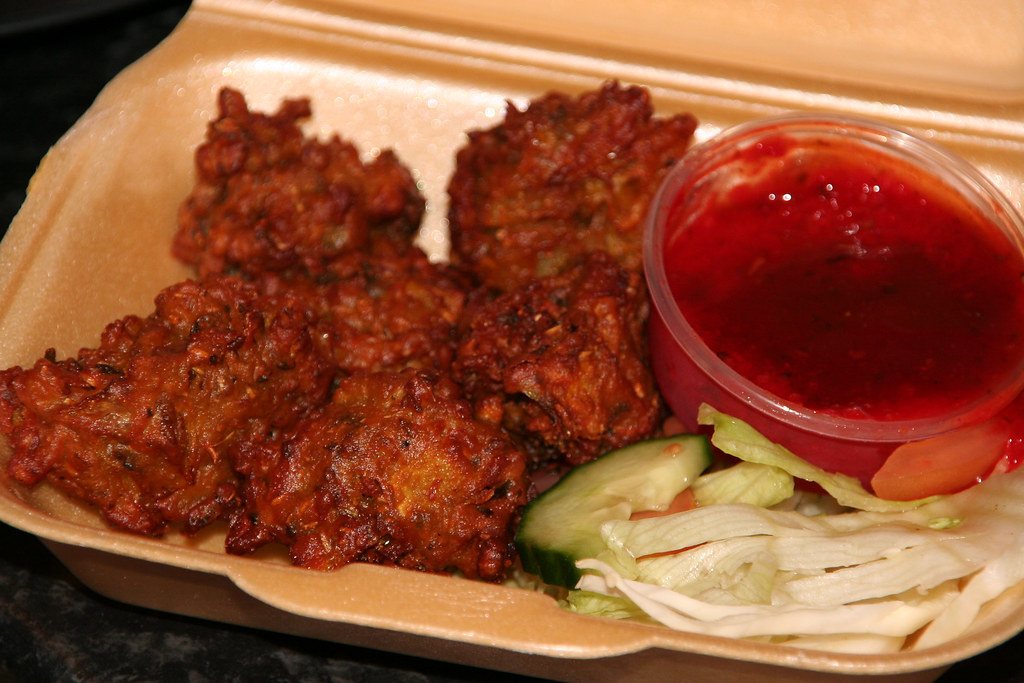
When the first monsoon clouds roll in, or the iftar table needs something hot and crunchy, pakoras are the answer. This vegetable pakora recipe uses a mix of onion, potato, spinach and cauliflower held together with just enough spiced besan batter to make lacy, shatter-crisp fritters rather than heavy doughy balls.
The approach is simple: salt the vegetables first so they release their own moisture, then add flour and only a splash of water. You get a thick, clingy batter, plenty of crunchy edges, and pakoras that stay crisp long after they leave the pan.
Why This Version Works
Most soggy pakoras come from too much water and too little heat. Here, the vegetables do much of the hydrating, so the batter stays thick and coats rather than drowns them. A little rice flour adds extra crunch, and dropping the mixture into the oil in loose, rough spoonfuls creates craggy surfaces that crisp up beautifully.
- Ready in around 30 minutes from start to finish.
- Naturally gluten-free when you use rice flour rather than wheat.
- Endlessly flexible: use whatever vegetables are in the fridge.
- Crisp for longer than typical batter-dipped pakoras.
Choosing Your Vegetables and Flour
The quality of your pakoras depends on how the vegetables are cut. Thin slices and small pieces cook through in the time it takes the batter to turn golden, so nothing is raw in the middle.
- Onion: the essential one. Slice it thinly and separate the rings so they form crunchy strands.
- Potato: cut into thin matchsticks. Thicker chunks will stay hard.
- Spinach: shred the leaves; they turn crisp and almost papery in the oil.
- Cauliflower: use tiny florets, or blanch larger ones for 2 minutes first.
- Besan: gram flour is the base. Sift it if it looks lumpy.
- Rice flour or cornflour: either one makes the coating lighter and crisper.
- Whole spices: crushed coriander seeds, cumin and ajwain add texture and help digestion of the besan.
Vegetable Pakora Recipe: Extra-Crispy Mixed Pakoras in 30 Minutes
Pakistani · Snack · Easy
Ingredients
- 150 g (about 1 1/4 cups) besan (gram flour)
- 2 tbsp rice flour or cornflour
- 1 medium onion, thinly sliced
- 1 medium potato, peeled and cut into thin matchsticks
- 1 handful (about 40 g) spinach leaves, shredded
- 100 g cauliflower, cut into very small florets
- 2 green chillies, finely chopped
- 2 tbsp chopped fresh coriander
- 1 tsp crushed red chilli flakes
- 1 tsp coriander seeds, crushed
- 1/2 tsp cumin seeds
- 1/4 tsp ajwain (carom seeds)
- 1/4 tsp turmeric
- 1 tsp salt, or to taste
- 1/4 tsp baking soda (optional)
- About 80-100 ml cold water
- Oil for deep frying
- 1/2 tsp chaat masala, for sprinkling
Method
- Put the sliced onion, potato, spinach, cauliflower, green chillies and coriander in a large bowl. Add the salt, toss and leave for 5 minutes so the vegetables release a little moisture.
- Add the besan, rice flour, chilli flakes, coriander seeds, cumin, ajwain, turmeric and baking soda. Mix with your hands so the flour coats the vegetables.
- Add cold water a tablespoon at a time, mixing, until you have a thick batter that just clings to the vegetables. It should not be runny.
- Heat oil in a deep pan or kadai to about 175°C. A drop of batter should rise to the surface quickly with steady bubbles.
- Drop loose, rough spoonfuls of the mixture into the oil without pressing them together. Fry in small batches for 4-5 minutes, turning, until deep golden and crisp.
- Lift out onto a wire rack, sprinkle with chaat masala, and serve hot with chutney.
How to Make Pakoras: A Walkthrough
Salt and rest
Tossing the vegetables with salt and leaving them for five minutes is the most important step in this vegetable pakora recipe. The onions and spinach soften slightly and release liquid, which the besan will absorb. You will be surprised how little water you need afterwards.
Build the batter
Add the flours and spices and mix with your hand, squeezing gently. Then add water a spoonful at a time. Stop as soon as the mixture holds together when pressed. If you accidentally add too much, sprinkle in a little more besan.
Get the oil right
Aim for about 175°C. If you do not have a thermometer, drop in a tiny bit of batter: it should sink briefly and then float up with lively bubbles. Oil that is too cool makes greasy pakoras; oil that is too hot browns the outside before the potato cooks.
Fry in small batches
Use your fingertips or a spoon to drop small, loose clusters into the oil. Do not pat them into balls. Fry five or six at a time, turning once or twice, until they are deep golden. Second-frying is an old trick: fry until pale golden, rest for a few minutes, then fry again briefly for maximum crunch.
Tips for the Best Pakoras
- Mix the batter just before frying. If it sits too long, the vegetables keep releasing water and the mixture turns runny.
- Drain on a wire rack, not paper towels, so the bottoms stay crisp.
- Season straight out of the oil with chaat masala so it sticks.
- Keep fried batches warm in a 100°C oven while you finish the rest.
- Strain and reuse the oil once or twice for other frying.
Variations
Once you have the basic vegetable pakora recipe down, try these popular twists:
- Aloo pakora: thin potato slices dipped in a slightly thinner batter.
- Palak pakora: whole spinach leaves dipped individually for flat, crisp chips.
- Chicken pakora: bite-sized marinated chicken pieces in the same batter, fried until the inside reaches 74°C (165°F).
- Mirchi pakora: large mild chillies, slit and stuffed with spiced potato, then battered.
- Paneer pakora: paneer slices sandwiched with green chutney and dipped in batter.
Serving and Storage
Pakoras are best eaten within minutes of frying. Serve them with mint-yoghurt raita, tamarind chutney or plain ketchup, and a pot of masala chai. For a fuller plate, add them to kadhi for classic pakora kadhi. They also make a great side for daal chawal, adding crunch to an otherwise soft, comforting meal. At a party, pile them on a big platter with small bowls of two or three chutneys so guests can mix and match.
Leftover pakoras keep for 2 days in an airtight container in the fridge. Reheat in an air fryer at 180°C for 4-5 minutes or in a hot oven for 8 minutes, and they will crisp up again. The microwave will make them soft.
Frequently Asked Questions
Why are my pakoras soft and oily?
Usually because the batter was too wet or the oil was not hot enough. Use less water and keep the oil around 175°C, frying in small batches so the temperature does not drop.
Can I bake or air fry pakoras?
Yes, though expect a slightly different result. Shape small flat clusters, spray with oil and air fry at 190°C for 10-12 minutes, turning halfway. They will be crisp but less lacy than deep-fried ones.
Is baking soda necessary?
No. A small pinch makes pakoras slightly puffier and lighter, but they are still delicious without it.
Can I prepare the vegetables in advance?
Slice them up to a few hours ahead and keep them chilled, but only add salt and flour right before frying.
What can I use instead of besan?
Besan gives pakoras their nutty flavour and is hard to replace. In a pinch, a mix of plain flour and cornflour works, though the taste and texture will be different.
Bring On the Rain
A plate of hot pakoras makes any grey afternoon better. Keep the batter thick, the vegetables thin and the oil hot, and this vegetable pakora recipe will give you crisp, golden fritters every time. Put the kettle on before you start frying.